I have to admit that my enthusiasm for writing about video games has waned a bit in recent years because so often my thoughts are criticisms and I am loathe to fault fellow developers doing good work. As I’ve experienced the challenges of building and selling independent games first hand, and as my position in the industry has become one with a modicum of influence, I have felt conflicted complaining in public. It used to be so easy to rag on a game for being lame, but now, even when I play a real stinker, I think, “man, that team must have really worked hard.”
There’ve also been a few times in the last couple of years when I’ve found myself on the opposite side of public opinion. Games that everybody seems to love that, for whatever reason, leave me cold. Sometimes I wonder if I’ve become a crotchety old man sitting on my porch and yelling into the wind about how wrong everybody else is. Should I write only about the games I loved? Should I tell you all to go out and buy Signalis and Paranormasight: The Mermaid’s Curse forthwith? Or maybe I should write some sort of starry-eyed retrospective that marvels that we got a new Resident Evil, a new Silent Hill, and a new Fatal Frame release all within six months of each other for the first time in like 20 years? I don’t know about you, but I’m kind of bored of that sort of analysis. Others do it better anyway.
So let me try to feel my way through this one without, I hope, slighting any of my fellow developers. Because the games I’d like to talk about are master class examples of high quality production. They are beautiful experiences that just exude polish, and they’re generally made by small teams punching well above their weight. I have so much respect for the teams who built these things, because I’ve built a lot of games myself and I know what they are doing is exceptionally hard. And yet, despite the killer art and fantastic sound design and rock-solid programming, I find myself ending these titles on a sour note, feeling frustrated, bored, and something else, something harder to articulate. A certain disappointment for missed potential, a sadness that such competent examples of the form suffer from a critical, and deadly, deficiency.
The problem I have with these titles is that they do not have what I call load-bearing mechanics. These titles tend to be short, and simple, and focused on narrative, so they don’t need complex game systems. In fact, these types of games tend to avoid calling attention to their mechanics because the player is supposed to be using their brain to process the story rather than the timing of the jump button. Still, they have to have something for you to do, some activity to perform as you consume the narrative. And that activity, the core mechanics of these games that are still very much choosing to be games and not some other form of linear entertainment, cannot bear the weight of the game for its duration. There’s just not enough to chew on, not enough for the grey matter to work on.
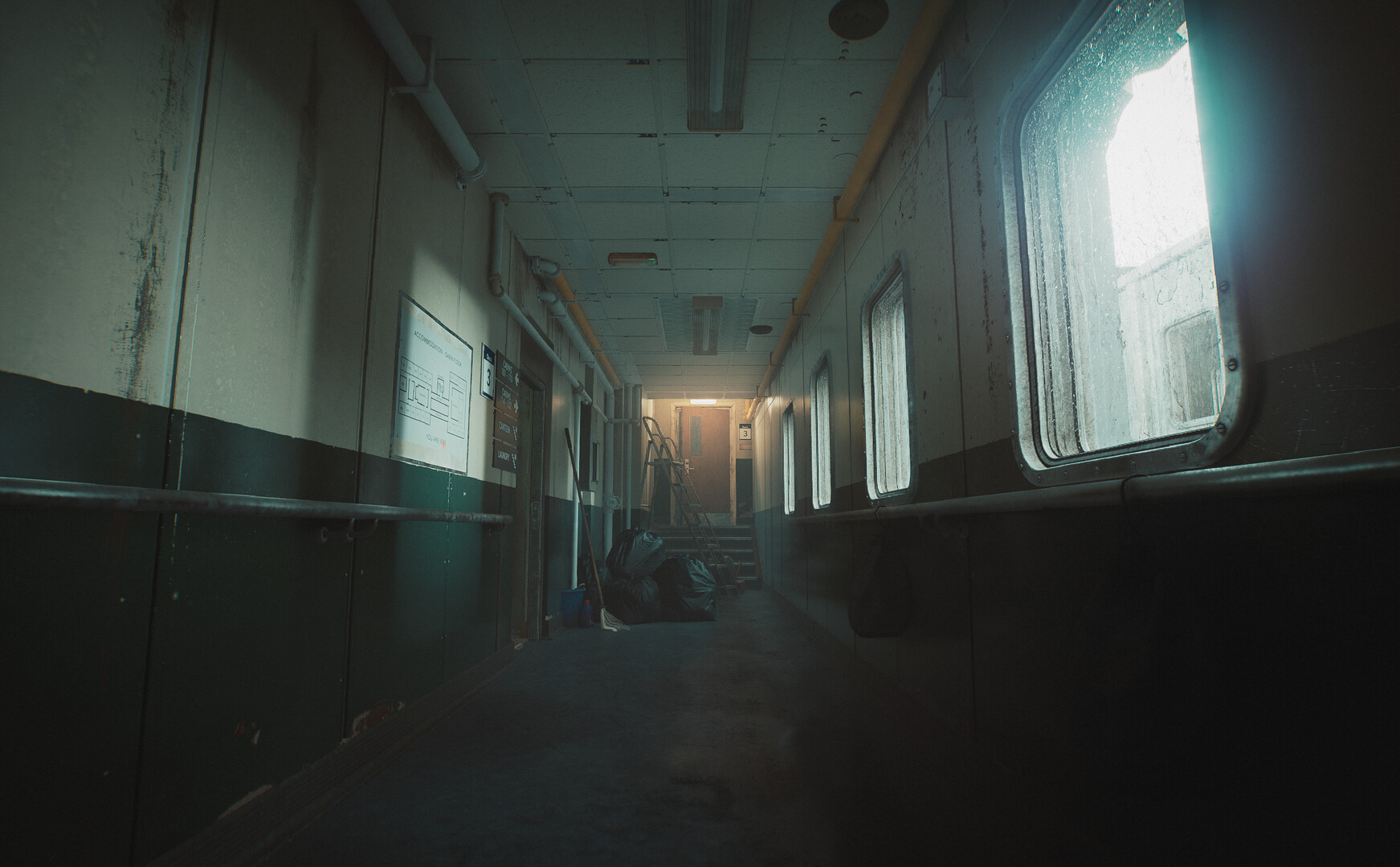
The offenders I have most recently encountered are Still Wakes The Deep, a narrative horror game / walking simulator from the undisputed champions of that genre, The Chinese Room, and Scarlet Deer Inn, a beautiful side scrolling adventure game set in a medieval village made by just two very talented people. True to form, both are gorgeous, nuanced, and carefully crafted games that scored very highly with the public, and that I didn’t enjoy very much. Both, in my opinion, employ mechanics that are not intrinsically bad but cannot bear the weight of the duration of the game.
These titles fail the load-bearing test in opposite ways. In Still Wakes The Deep, the input mechanics have been so absurdly polished that it’s nearly impossible to fail (and when you do, it’s because the input required was confusing, not because there’s a puzzle involved). In Scarlet Deer Inn, the intended simplicity of the mechanics cannot produce the degree of expressiveness that the level design requires, creating an unintentional difficulty spike. But both games have the same basic problem: they’ve simplified their mechanics to such a degree that their games run out of steam long before you reach the end. These games either needed to introduce more complexity into their controls / puzzles / narratives / game play systems, or they needed to be shorter.
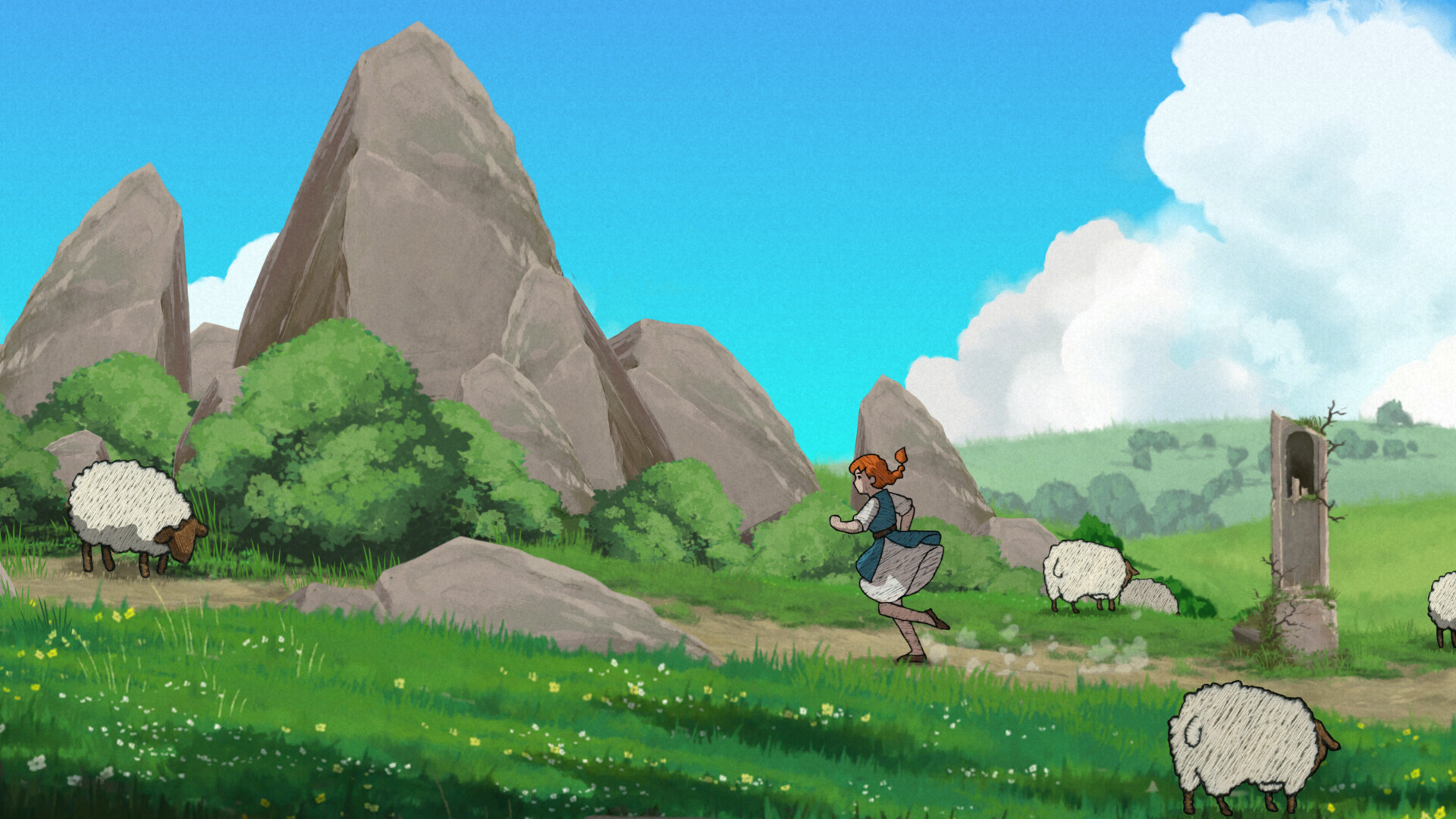
In Scarlet Deer Inn, beautiful embroidered meadows give way rather quickly to Metroidvania tunnels and chasms, minus the systems that make Metroidvanias interesting. Though the art is beautiful, you barely get a chance to see it because one of the main mechanics involves carrying a quickly-dying flame to the next available torch, which means that you constantly Carl Lewis through the map. The platforming controls–perfectly fine for a light stroll through the dale on your way to the castle–are not tight enough to support the demands of the underground level design, not to mention the sequences in which you must chase a little parkouring imp. Combined with one-hit kills and distant checkpoints, the result is a recipe for frustration: the same level segment is repeated over and over, until the narrative power has been completely lost and the game has devolved into a lengthy Simon Says session. There are so many opportunities for other latent mechanics to keep the mix varied (the game has brief stealth sequences, a couple of block puzzles, and a map that I really wanted to explore), and yet prefers to spend its time forcing you to solve the same race-for-the-light challenge over and over again. The end boss fight is a particularly poor experience.
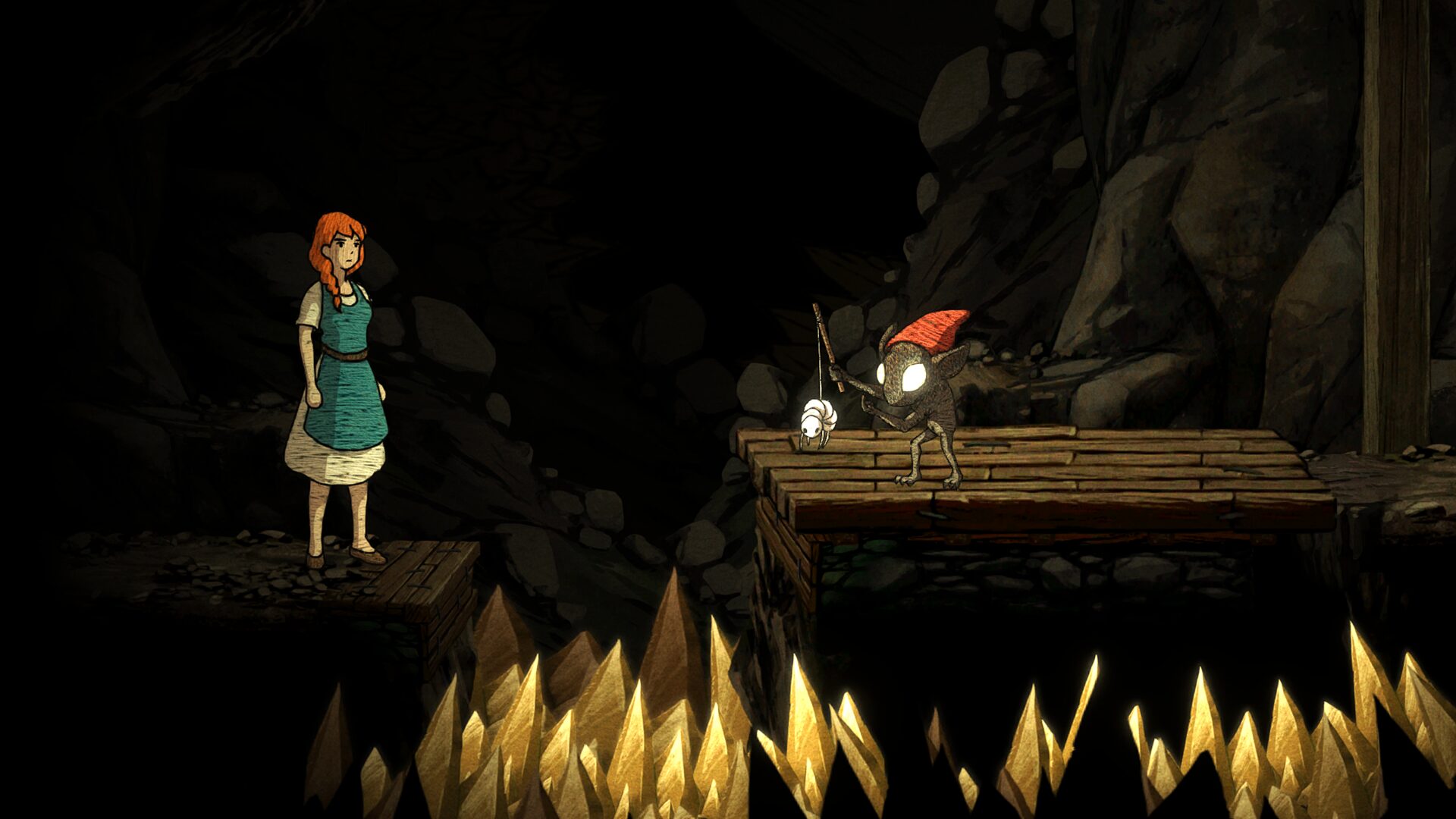
It’s frustrating because Scarlet Deer Inn is otherwise fantastic. The embroidered style is beautiful, the music is excellent, I enjoyed the writing, and clearly it is the work of significant passion. It does so many difficult things easily, and then drops the ball on the part of its design that has the most precedent, the longest history, and the most documentation.
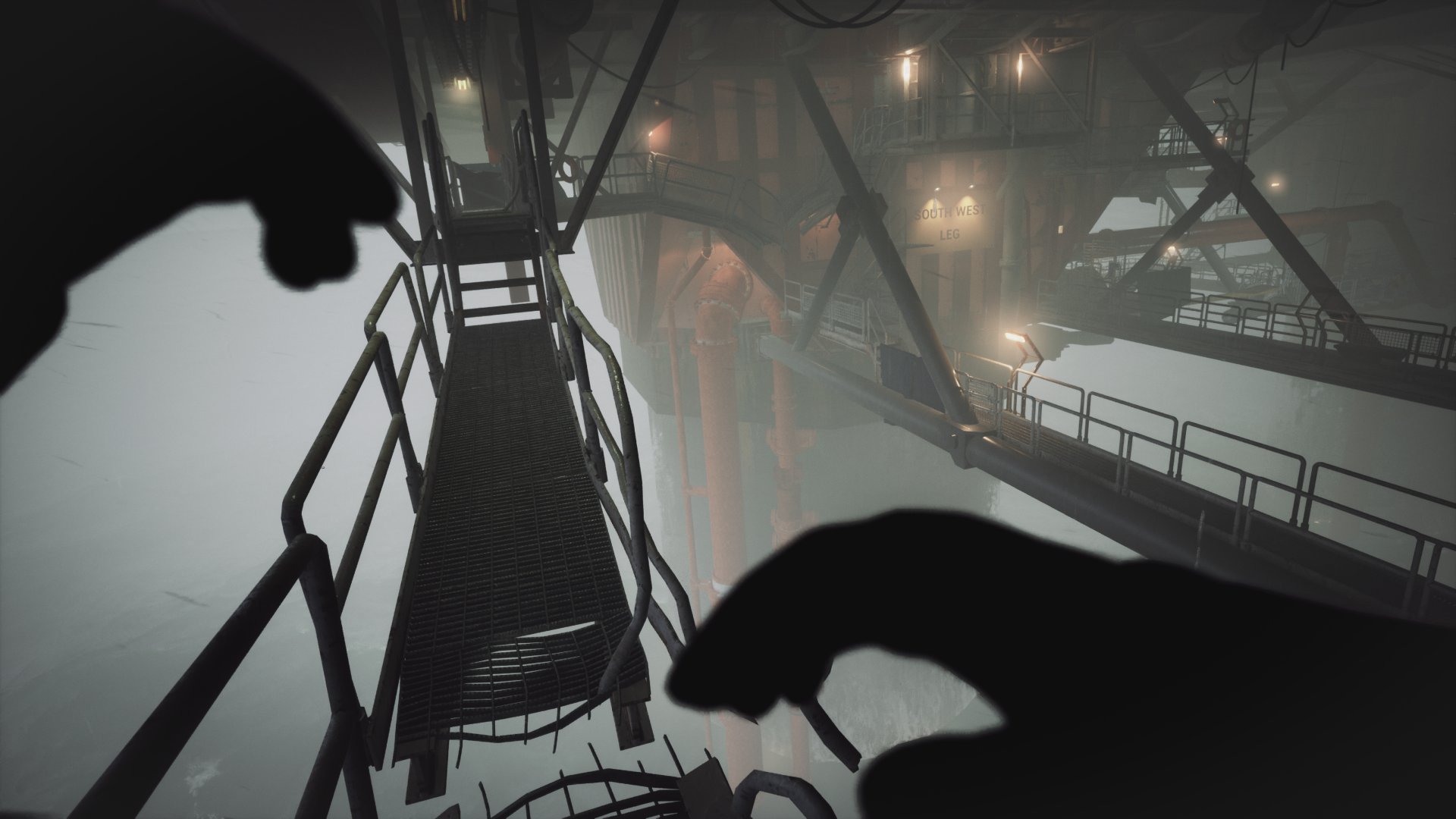
Still Wakes The Deep is also beautiful, and it plays well enough. It just feels like it would be better if I were watching a 90 minute movie instead of playing a multi-hour video game. With no opportunity to fail, and no real decisions to make as I traverse the level, I start to wonder why I am actually playing. What does the author of this story need with me? He’s already decided all that is going to happen, and when, and my job is to hold up on the control stick so we can get on with it. Every collision volume is rounded, ensuring I’ll never get stuck on a corner. Every trigger box is perfectly timed. It’s like a song edited to such perfect radio-readiness that it slides across your brain and refuses to stick. In The Chinese Room’s quest to boil interactive video games down to their story telling essence, this one feels like they’ve left only the steam. I am a fan of this genre, I think Dear Esther is required playing for all game designers of any stripe, but Dear Esther works because it ends in 1.5 hours, is steeped in mystery, and because it gives you a wide field to explore. Still Wakes The Deep is a super professionally-produced ~5 hour corridor-walker with masterclass voice acting that runs mostly on autopilot. I wanted something–anything–for my brain to work on. But the philosophy of this title is the grammar of game play is simply a delivery mechanism for the story. I am less a participant than an observer.
I see in these titles, and in others like MiSide, a rejection of classic console video game design thinking. These games want to adopt the form of games that came before them, whether they are 3D first person games or side scrollers, but intentionally eschew the mechanical depth of those games as puerile. They want to pursue a narrative mode of thinking rather than a systemic one. I get that–the types of games I want to make work that way too. But in their push to remove all “game-y” elements, they have (unintentionally, I think) removed much of what makes games interesting to play as well. If the interestingness is not in the mechanics suddenly all the other elements of the game must pick up the slack, and frankly that’s a very hard job, and perhaps one best left to a non-interactive medium. There’s a reason that Japanese visual novels have become the pioneers of 4th-wall-breaking meta-game design: restricted to a format that only supports images and text, designers in that genre had to find other ways to keep their games interesting for many hours years ago.
That’s why I feel a sort of gloom when I play these games. They are so unbelievably well built and well produced, and yet they’ve missed the forest for the trees. They’ve made an incredibly high quality video game and the only thing they forgot to add was the game. And you can’t tell until you’ve played quite a bit, because the mechanics they do have are generally solid–they just run out of things to say somewhere in the second act. And for these games who are pushing on the forefront of what games can be, who are desperately trying to make things that are beautiful and moving and broadly accessible, it’s just so unfortunate that they miss on the one axis that is well trodden, on the part of the game design for which the rules are very clear. It’s almost as if, in their zeal to separate themselves from the old school, they have forgotten the basics. And that’s a real shame.
So excited to read another post from you, Chris. I’ve always enjoyed your thoughtful (and entertaining!) writing. I get you don’t want to rain on other devs’ parades. But also (speaking only for myself, of course) I think you have good taste. That, paired with your eloquence and experience means I wanna hear more from you, rather than less.
Your post here (esp in the final paragraph) reminds me of a Mercedes Benz quote, I can only paraphrase it now–that they wish to innovate, but also build on the great things that have come before. It sounds to me like these games, in their rush to be innovative or maximizw their house style/philosophy, have thrown the baby out with the bathwater.