|
|
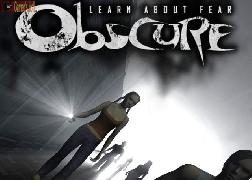
This week a friend and I played through most (about 3/4ths) of Obscure. I was away from home on a business trip, so it was a good excuse to take a break from Silent Hill 4 and check out the two-player action in Obscure. Though I must reserve final judgment until the game is complete, my impression of Obscure is quite good. The two-player mode in particular is awesome, as is the party system and light mechanic. The graphics are pretty good, and there are a few legitimate scares packed away in the game’s depths. The problem with Obscure is mostly that while it has some really innovative elements, it’s also based on rather bland puzzles and combat. The plot is run-of-the-mill, the characters are only mildly interesting, and the monsters are (with a few exceptions) pretty standard. The game’s innovations seem to be enough to keep it afloat, and there are very few execution problems, but some of standard survival horror game elements feel a little flat. The game is also quite dark and there seem to be a few dramatic spikes in difficulty. But in general, Obscure is a solid survival horror game with some really cool elements going for it. It’s not quite revolutionary, but like The Suffering, it gets enough of the equation right that the experience is fresh and enjoyable. |
Alone in the Dark 5
It appears that Alone in the Dark 5 is in development. I was tipped off by a news brief at Gamasutra, and I found some confirmation at Boomtown (babelfish translation from French) that is a year old. Eden is a French developer Kya, a third-person Jak & Daxter style platformer, as well as V-Rally 3. This means that their parent company, Atari, has moved the project away from the previous developer, Darkworks (who recently finished Cold Fear. Hopefully there will be something to see at E3 about ALOD5.
Quest Status Update
Obscure is now out in the US, and I found it brand new for $20. I also tracked down Echo Night Beyond brand new for a mere $7 over the weekend, which seems like a pretty good deal. Doom 3 is now out for Xbox too.
Lately I’ve been playing through Silent Hill 4, which is quite weird. The game itself is enjoyable, but the pacing is very strange: there are (apparently) no bosses, nor have there really been any climactic points in the story yet. The game has just recently gone from being very easy to being very hard, which is frustrating. It seems like the source of this frustration are a few types of enemies that cannot be killed. They are a source of infinite damage, but of course only limited health items are available. My life bar has been at about 10% for the last two hours of play, and dying all the time is really starting to get annoying. The game is fun and the story is interesting, but the progression is very strange.
Fatal Frame 3 and Haunting Ground Screens
Screenshot update from The Magic Box:
- New screens from Fatal Frame 3
- Yet more images from Capcom’s Haunting Ground, which is due out pretty soon, I think.
Apparently Fatal Frame 3 will take place in both reality and a nightmare, and the player will have to move between both places to progress. Hmm, what game does that sound like?
GDC: Real Time Movies in Resident Evil 4
Here are my notes from the talk at GDC titled Real Time 3D Movies in Resident Evil 4. This talk was a technical discussion of how the artists at Capcom went about creating the movie content for Resident Evil. Consequently, its target audience is not really RE fans, which is why I haven’t posted it until now.
The speaker, Yoshiaki Hirabayashi, is a lead artist at Capcom. He began his talk with a discussion of why Capcom decided to employ realtime movies for Resident Evil 4. Pre-rendered FMV sequences are not time effective, he explained, as the rendering process takes so long that minor tweaks cannot be easily made. Realtime movies were also preferable because they provided more flexibility, and seamlessly integrated with the rest of the game.
Hirabayashi explained that they wanted to fuse the action of the game with the cutscenes, and this decided to make some cutscenes interactive with the action button. Most games simply interrupt the game experience when a cutscene comes along, but the Resident Evil 4 team wanted to keep people engaged. Using interactive cutscenes forced the player to pay attention, which was part of their goal.
Hirabayashi then shifted gears and began talking about the elements of a good realtime cutscene. He listed the following as elements:
- Smart use of time
- Believability, including using secondary motion to make animations realistic
- Appealing characters, even at the expense of realism
- Intelligent use of CPU and GPU resources: swapping textures and models during cuts, et cetera.
Hirabayashi also described the work environment that the team employed. Game artists typically rely on programmers to put their work into the game, but this approach is slow and time consuming. For Resident Evil 4, the team built a web server that could manage game assets and automatically convert animated cutscenes from Softimage to the game format. This allowed the artists to quickly iterate over their work without involving a programmer, and it moved a lot of work that programmers normally do to the graphic artists, which saved time. This system allowed the graphic designers to solve problems like memory constraints, and resulted in higher-quality work overall. Using this system, Hirabayashi noted that on other game projects typically spend 30% of their time creating scenes, 27% of their time tweaking scenes, and 43% of their time converting scenes to the game format. Under the web server system, the Resident Evil 4 team was able to put much more time into tweaking: 25% of their time was for creation, 50% for tweaking, and 25% for conversion.
Changing gears, Hirabayashi then went on to talk about facial animation in RE4. Ashley’s face had 3500 polygons, which was about average for each character. They created 36 expressions for each character (implemented via morph targets), which was 1.5 times more than any other game they have done. To manage these expressions efficiently, they created a system that allowed them to package different groups of expressions depending on the scene. Given 30 slots for expressions and 25 basic expressions, they were able to select 5 unique expressions for each scene. This allowed them to only load the data they needed. Interestingly, they animated all of the facial expressions by hand after being disappointed with the results of motion capture and phoneme-based animation generation.
The “package of relevant” data concept was extended beyond facial animation. For each scene, the artists were able to choose between low, medium, and high quality models and textures. If they used both high quality models and a high quality texture, each character cost around 400k. However, having the ability to mix and match these assets allowed them to customize the level of detail needed for each scene. If they needed a scene that had a lot of lighting but did not focus on the characters up close, they could use a high poly model (good for lighting calculations) with a middle-quality texture. Or, if there was an extreme close-up with little animation, a low poly model with a high resolution texture would produce good results. Managing these packages of characters allowed them to adjust the relative complexity of each scene, and thus choose between a few highly detailed characters or several simpler characters. Interestingly, they also modified textures depending on the situation. They found, for example, that six different eye textures were necessary to make the character’s eyes look correct in all scenes on a TV.
Hirabayashi also discussed a few of the lighting and visual effects technique used in RE4. Projection lighting is a form of projective texture where a 32×32, 64×64, or 128×128 texture is mapped over the light frustum, making it look like there is geometry between the light and the character. A good example of this is the knife fight with Krauser, where the characters appear to be under a grid-shaped ceiling with a light behind it. They also used real-time generated textures for reflection, and were able to animate depth of field by precomputing a blurry image and then shifting it slightly as the scene progressed. This approach worked well when most of the scene was not moving, such as during dialog scenes.
Overall, it was a pretty interesting lecture for game developers. I am not sure how much regular gamers care about this stuff though.
Zombie heads a-‘splodin
I’ve finally posted my thoughts on Resident Evil 4. I beat it about a month and a half ago but just now got around to writing up my review. It’s not really a traditional review, but I figure that you can get a story summary or similar at places like 1up.com. One of these days I’ll get around to updating the screen shots.
GDC Slides Available
|
|
Right after GDC, I wrote about Akira Yamaoka’s talk on Silent Hill. The slides to his presentation are now available in PowerPoint format. If you are interested in the design of the Silent Hill games, you should check this out. Also available is notes from a technical discussion on the cutscene creation process from Resident Evil 4 that I never got around to posting about. It looks like the Resident Evil talk has had a lot cut out of it, but if you guys are interested I can still post my notes. |

Horror Flicks
I used to watch a lot of horror movies, but I don’t have much time for them any more. Just recently I saw a few (a failed attempt to erase Alone in the Dark from my brain), so here’s a few impressions.
- The Shining (1980) – This movie is famous for a reason. It’s got all sorts of stuff going on, yet it manages to be subtle and subdued. The presentation, particularly the music and cinematography, is fantastic. And the story is wonderfully suggestive without being explicit. Highly recommended.
- House of 1000 Corpses ( 2003) – You know how sometimes a movie can have a terrible title but then turn out to be pretty good underneath? This is not one of those movies. Directed by Rob Zombie, House of 1000 Corpses is sort of an amalgam of every slasher flick made in the last 25 years. Unfortunately, it’s not constructed in a way that might be interesting. I’d guess that there really are 1000 corpses in this film, and man, do they get boring after the third or fourth. You’d think after watching so many horror movies Rob would have realized that gore and nudity are never good replacements for plot. Moral of the story: if the director is famously related to horror but has never directed before (I’m looking at YOU, 976-EVIL), the movie will not be good. Stick to the music, Rob. The one redeeming quality of this movie is the Captain Spaulding character, who is both well-delivered and hilarious.
- The Ring Two (2005) – So like most everybody else I throughly enjoyed the original Japanese Ring movie. The sequels weren’t that hot, but the first movie was inspired. I was unimpressed by the American remake because it added all kinds of superfluous details and yet still failed to meet the subtle horror of the original. So I went to see The Ring Two with cautious optimism, especially after I learned that the director of the original Ring was responsible for the American sequel. I really should have known better. The Ring Two isn’t terrible, it’s just not very good. It’s actually fairly similar in quality to the Japanese Ring 2 (which has a pretty different story), but its somewhat less interesting because it goes in too many directions at once. The worst sin of the film is that it discards the “killer tape” mechanic, which is what made the series interesting to begin with. There are some nice moments (a particular climb up a well was pretty great), but overall there’s nothing here you haven’t seen before.
In summary: see The Shining, avoid House of 1000 Corpses like the plague, and wait for Ring Two to be a $3 DVD rental.
Haunted NES Games
Thanks to Dave for pointing me to a cool synopsis of a bunch of horror games for the Nintendo Entertainment System. Most of these games are not really appropriate for the Quest (except for this one, but it’s an interesting read nonetheless.