I’m a bit late to the party here, but NTSC-uk has an excellent history an analysis of survival horror. The author is well versed in the genre and this article is one of the very few that I’ve seen to incorporate the influence of such obscure games as Clock Tower: The First Fear and Sweet Home. A good read.
Make your own PSP (horror) Game
|
|
Thanks to Insert Credit for linking to an article on Gamespot abut From Software’s upcoming PSP title, Adventure Player. Adventure Player will run adventure games that user can create themselves on a PC with software called Adventure Player Studio. Several sample Adventure Player games will ship from From, the first of which appears to be Echo Night. Sounds pretty cool! |
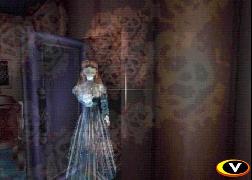
Some Games Came Out
Man, tons of updates today.
Some games came out recently that I forgot to cover on the front page:
- Cold Fear is out in the US and Europe. You can see some gameplay movies at the official site.
- Constantine came out with the film. It has not been well received.
Next month Doom 3 Xbox is coming out, and if they make their release date, so will Call of Cthulhu: Dark Corners of the Earth.
Donation Update!!
Many, many thanks to forums user 16bitman for donating more games to the quest! This time he’s contributed Countdown Vampires, Galerians, and Juggernaut. Dude, I am totally, totally in your debt.
Fatal Frame 3 Info + Screens
|
|
Thanks to forums user cameraslens for some information and screens from the upcoming Fatal Frame 3.
As of right now… It’s just ‘Zero’. (I’m sure we’ll have an extra title for it soon) The heroine’s name is Rei Kurosawa. She’s a 23 year old freelance photographer, searching for her boyfriend who has disappeared under mysterious circumstances. She also teams up with Kei Amakura, a writer & relative of her boyfriend, and Miku Hinasaki, her assisstant. (Yes, it is the Miku from Fatal Frame 1) While searching through a mysterious mansion, Rei suddenly finds a strange dragon/snake tattoo appearing on her arm. As time passes, the tattoo covers more and more of her body. What’s even more unsettling, is a few of the ghosts in the mansion also wear the same tattoo. Apparently, you’ll be able to play as all three characters, however the extent of how you can play them is sketchy at the moment. The gameplay is also going to have a ‘silent hill’ ish feel. As there will be two worlds. “Reality’ and ‘the world of nightmares’. Thanks to cameralens.com. According to the Famitsu scans, the game is 60% complete, so we can probably expect it by Christmas 2005. |

GDC: Akira Yamaoka and the Atmosphere of Silent Hill
At the Game Developer’s Conference last week, Akira Yamaoka gave a presentation about how the atmosphere in the Silent Hill series was constructed.
Yamaoka split his talk into two sections: Day and Night. The Day portion of his talk began with a discussion about how horror differs between American and Japanese cultures. Yamaoka called Silent Hill “American modern horror through Japanese eyes,” and explained that he had set out to make a Japanese-style American horror game. He mentioned Steven King and David Lynch as inspirational writers, but he also pointed out that being Japanese, many aspects of the horror of Silent Hill were probably influenced unconsciously by Japanese culture.
Yamaoka talked at some length about these differences. He discussed the Japanese concept of onnen, which is a grudge or need for vengeance that might be manifested even after the person’s death. Below is a list of characteristics that he described being rather culture specific:
| Japanese Style | Hollywood Style |
|
Unseen Enemy Vengeance – Hatred Sad Story |
Evil Spirits Zombies Shocking Visuals |
Generally, Yamaoka said that Japanese style horror tends to focus on story (which is often very sad), while Hollywood style is often much more concerned with creating “surprise horror.” This may be because Japan has a rich history of horror folklore, and whether they realize it or not, everybody who grows up in Japan today is exposed throughout their lives to these traditional concepts.
Yamaoka then switched gears and started talking about the creation of Silent Hill. He covered his “concept of horror,” which included a story arc that Silent Hill follows. Among his various points, he noted that the story need not explain everything because the user will fill in the blanks. He also said that minor details in the presentation or story could help enhance feelings of fear in the user. Yamaoka then described how horror in Silent Hill is constructed as a progression of events that occur in the story.
- Uneasiness due to lack of information or illogical explanation
- Logical reconstruction via perception
- Stacking up fragmented info / creating space for imagination
- Providing general picture (this resolves the first part of the horror, but lulls the player into a more comfortable state)
- True horror revealed
Returning to one of his earlier points, Yamaoka went on to discuss the importance of realism and reality in Silent Hill. He explained that for horror to be effective, the player must be drawn into the story and must be convinced that the characters and events are real. To this end, Yamaoka and his team spent a long time on the animation of the eyes of the characters in Silent Hill 3. The Japanese have an expression that roughly translates to “The eyes explain more than the mouth,” (????), and this concept was explored at length in Silent Hill 3. In fact, a bug early in development caused the eyes of the NPCs to be slightly off their target, making everybody look like their point of focus was slightly off. This effect was so disconcerting that the development team decided to use it in the final version of the game. Yamaoka stressed that realistic presentation is not the same as realistic graphics; he noted that reality is built out of important details, and that things like realistic hair rendering and the like was not the way to make a more realistic game. He touched briefly on using the five senses to stimulate emotion from the player. He described ways that the subconscious can be shaken, such as exploiting the tendency humans have to be more comfortable with turning left than turning right (which is why most roller coasters have a lot of right turns). Yamaoka reiterated his point that reality was not a function of good graphics but of user believability.
During the Night portion of his talk, Yamaoka discussed the use of audio in Silent Hill. He described the ambience in Silent Hill as a product of auditory expression, especially the ambient sounds and radio static noise. He pointed out that while most movies use music to build tension before a horrific scene, he employed the sound of radio static when enemies were close to the same effect, which was more disconcerting to the player. Since Yamaoka is a musician by trade, he had a lot to say about the state of music in video games. He mentioned that until recently, music has been mostly an afterthought for most games, and has tried to avoid interfering with the rest of the game. However, if we consider the sound system as a form of interactive media, many more game play possibilities will be available, especially when the next generation of hardware effectively removes most of the limitations game audio makers deal with today.
Yamaoka closed his lecture with a brief discussion of how content must be created for the next generation. He emphasized the importance of metaphor, and noted that game systems other that graphics will need to improve if we want to communicate metaphors more effectively. Metaphor is difficult to express with visuals, he said, because a metaphor is a symbol that is different for each individual, while visual representations are generally not. However, other types of interactive media must be employed to really get metaphors across to the user. Yamaoka also talked a bit about content that appeals to more than just the player’s eyes, such as force feedback. The goal with such content is to bring the experience into reality for the user. He likened this experience to listening to music live versus listening to a recording.
At the end of the lecture, Yamaoka took a few questions. I’m paraphrasing both the question and his response here.
Q: Can you tell us about the Silent Hill movie?
A: It will be similar to the games, closer to Hollywood horror than Japanese horror.
Q: Where did the idea for the radio come from?
A: European techno-industrial music and noise bands.
Q: How were you able to test your game? How can you be sure what you are making is scary?
A: This is difficult to begin with, since we’re trying to do something that hasn’t really be done before. We were looking for a balance between all new ideas and mass market appeal.
Q: Can you talk about the concept of emptiness in Silent Hill 4?
A: We decided that being alone is scary, especially when you cannot escape your confines.
Q: How do you tell your story without lying to the player?
A: We never lie to the player, but we may not tell them the whole truth. We misdirect the player with content that is simply confusing, and drop information that might be easily mistaken for something else. We also do careful testing to gauge how much of our story our users are really getting.
Q: How do you make fear personal to the player?
A: Everybody has their own concepts that they are scared of, and it’s hard to target fear at a specific individual. However, you can take advantage of things that tend to scare just about everybody, and fill your games with these sorts of ideas.
After his lecture, I spoke with Yamaoka for a few minutes until they kicked us out of the room. I was quite interested in his entire presentation, but the point about Western horror versus Japanese horror was particularly intriguing. I asked him if he felt that modern Japanese horror in popular culture (horror movies, etc) were more influenced by Hollywood style or by traditional Japanese legend. I noted that The Ring and Juon: The Grudge were moderately popular here in the States, but that most people here are not really aware of traditional Japanese horror stories like Earless Hoichi (??) Yamaoka’s take on the situation was interesting. He pointed out that Juon seemed very Western to him, as it spent a lot of time clearly showing the viewer the enemy (the cat-child, the woman at the end, etc). Ring, on the other hand, he found very Japanese; almost all of the movie deals with an enemy that we only briefly see, more of the horror is suggested than actually displayed, and the story is very sad. He said that he’d actually thought about giving a talk about Earless Hoichi at GDC, but was concerned that the story might be difficult for Westerners to understand (there is significant cultural context to the story, including a lot of Buddhist background; if explicitly explained beforehand, the story would lose some of its impact). If you are interested in the story, you can read it here, as translated by Lafcadio Hearn.
Yamaoka’s talk was perhaps the best lecture I attended at GDC this year, and I feel extremely lucky to have chatted with him afterwards. I’ll post more notes about horror games from GDC 2005 pretty soon.
Back from GDC!
I spent all of last week at the Game Developers Conference in San Francisco. This was the fourth year I’ve attended, and while the quality of the presentations continues to vary, I met a lot of cool people this year and had a chance to talk to some otherwise inaccessible folk. I finally met Tokyopia’s famous GMan, I chatted briefly with Akira Yamaoka (more in a later post), and Tuesday night I ended up at a party in Toru Iwatani’s hotel room (he’s produced over 50 games, but you might have heard of this one).
Some of the sessions this year were interesting as well. Keita Takahashi’s talk on Katamari Damacy was pretty interesting, and really enjoyed a talk about the realtime movies in Resident Evil 4 (more on that later). There were some neat technical sessions as well, which apply to my day job as a games programmer.
Between the people and the sessions I attended, GDC 2005 was a lot of fun. I’ll post more info on some of the horror-related things I learned shortly.
Yet More Haunted Ground Screens
New screens are available over at The MagicBox from Haunted Ground. This game, while very similar-looking to Clock Tower 3, also appears to have a really fresh approach to the genre. It comes out this month in Japan and Europe, and it should be out in the US in May.
Yes, I am still alive
My apologies for the lack of updates recently. Between moving, business trips, and a few days without an internet connection, I’ve managed to miss my almost-weekly posing schedule for two weeks in a row. Everything should be in order now, though.
Here’s some random horror-related tidbits:
- Doom 3 Xbox hits store shelves April 3rd.
- Resident Evil Outbreak: File 2 is supposed to be released in the US in April 2005.
- Though not appropriate for this site, Devil May Cry 3 was released yesterday and is a lot of fun.
Condemned Announced
|
|
Thanks to forums member Innominatus for the heads up about Condemned, a survival horror game slated for release on next generation (PS3 and Xbox2) consoles. Innominatus also provided a cool translation from the Jeux-France page: Sega unveils the first pictures of his next horror game entitled Condemned and developed by Monolith on the new generation of parlor consoles Xbox 2 and PlayStation 3 as well as on PERCENT. This game announces to be itself of a new kind since it is a matter of a mixture innovating between a FPS and a survival horror, a unique experience of the fear in an alarming atmosphere and realistic extremist. In this psychological thriller, the player will embody Ethan Thomas, an agent of the FBI that will have to investigate on several committed murders by Serial Killers in a dark universe and disturbing inspired film Seven. Thanks to the technical capacities of the future consoles, the editor announces us already a degree of realism never attains with notably graphic components of a very high quality such as the textures of the game. Looks pretty cool! Other than some Silent Hill 5 rumors, this is the first survival horror game to be announced for next gen consoles. |
