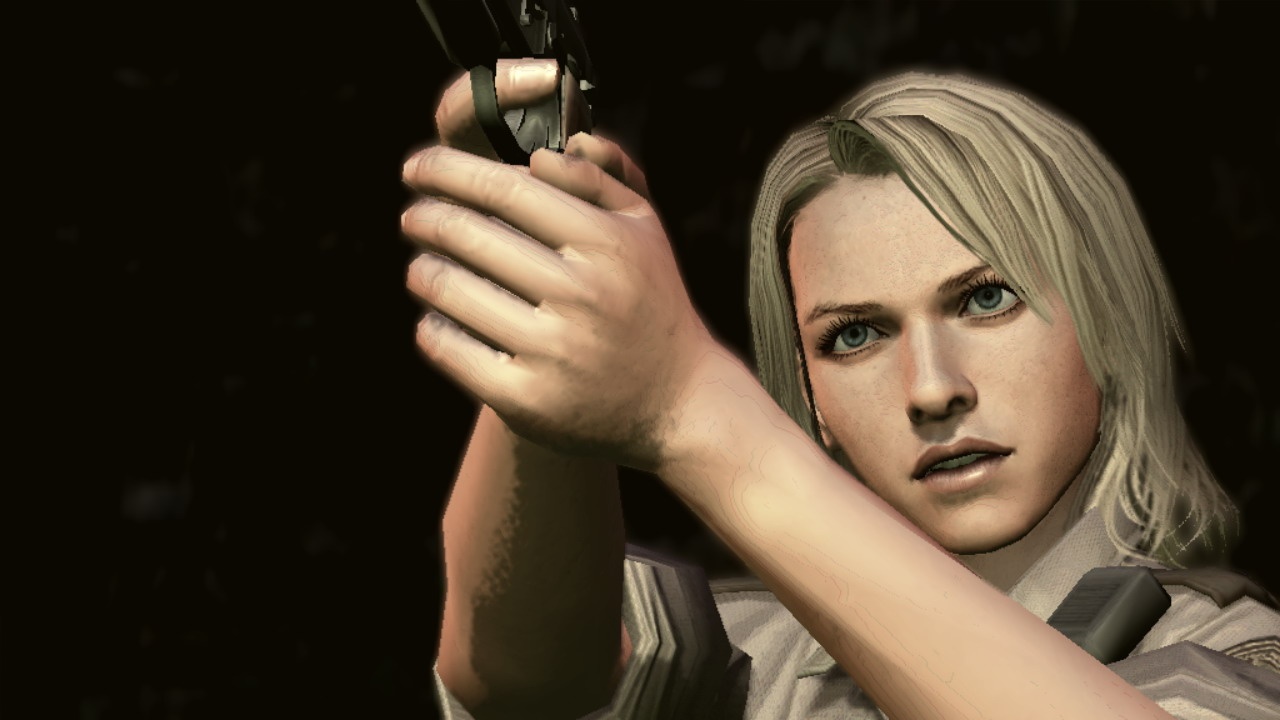
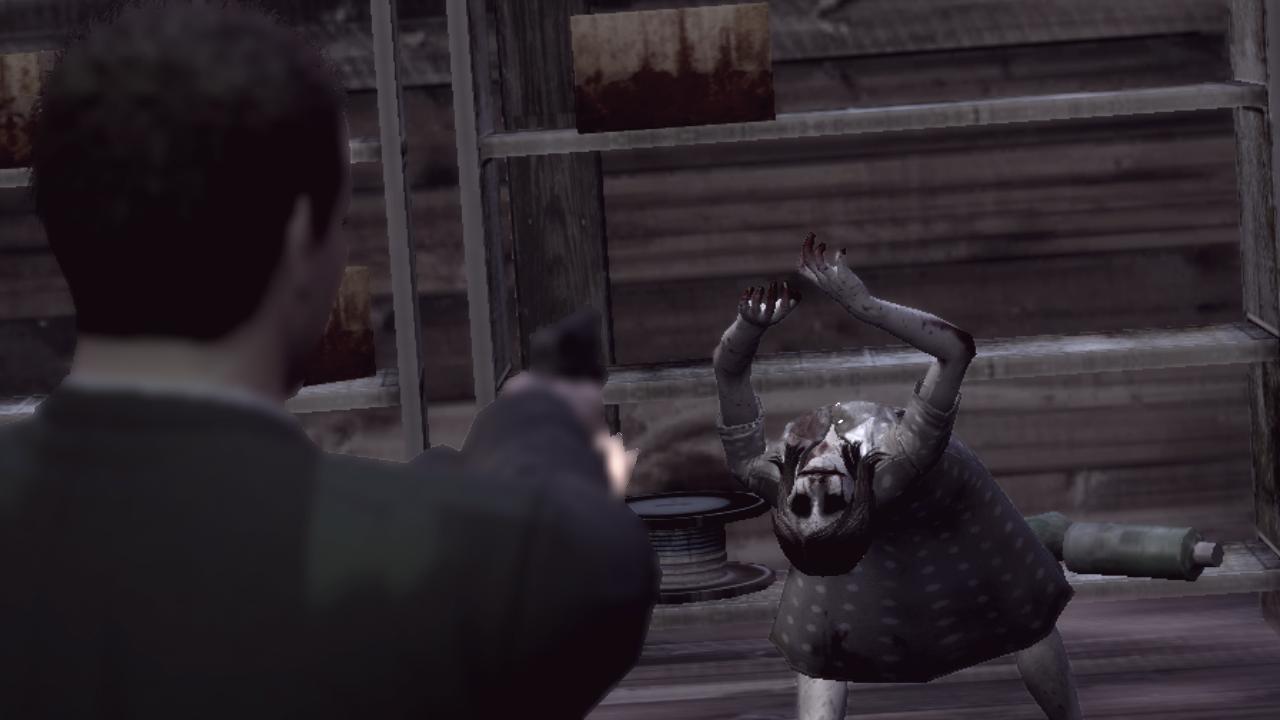
Deadly Premonition

Also known as: Red Seeds Profile
Platforms: Xbox360, PS3
Release Date: 2010-02-23
Regions: USA Japan Europe
Chris’s Rating: ★★★★
This fascinating translation of Twin Peaks to game form isn’t harmed by a few rough edges.

What follows is a long article about Deadly Premonition. I originally posed this as four separate posts on the front page, but here I’ve collected all four posts into a single document. This is tl;dr territory.

This isn’t really a review as much as a stream of consciousness; the game pushes a lot of buttons and rather than trying to enumerate them all, I think I’ll just meditate on the game a bit. That seems like the correct way to approach this particular game.

Before I get started, let me give a short mini-review for folks who don’t care what games mean. Deadly Premonition is Twin Peaks, in game form, as seen through Japanese eyes. Though wacky, it’s fairly low-tech; some of the mechanics are extremely rough, the game play systems feel at least a generation old, and it’s not going to win any awards for prettiness. But what Deadly Premonition lacks in technical polish it more than makes up for in storytelling, characters, and most importantly, its integration of game design and visual presentation. It’s worth playing for any of those pieces, and in combination the game is fascinating. Deadly Premonition is to Resident Evil 5 what Tetsuo the Iron Man is to Terminator 2. If you have any interest in games that experiment with story telling and mechanics, Deadly Premonition is more than worth your time.

THE UNCANNY

The internet, particularly one specific blog about games, has made a big deal out of the ridiculousness of Deadly Premonition. The music doesn’t match the scenes, the characters and dialog are often nonsensical, and the whole thing has a decidedly strange sense of humor. It’s very easy to write this strangeness off as normal “Japanese insanity,” and in truth, there are a few aspects of the game that seem strange because of culture clash. But I think that chalking Deadly Premonition’s strangeness up to the cultural divide is a vast oversimplification; classifying it as weird just because it came from a foreign country does the game, and its designers, a disservice. Deadly Premonition is weird, but the odd, off-beat rhythm that it follows–something Freud calls ‘the uncanny’— is entirely intentional.

The way to think about Deadly Premonition is to consider it the game version of Twin Peaks, the fantastic TV show by David Lynch and Mark Frost. I went back and watched Twin Peaks while playing Deadly Premonition, and the similarities are unarguable; some characters and scenes have been directly lifted from the seminal show for use in this game. At one point I was having trouble remembering which events were unique to the game and which had occurred in the show’s plot as well. Replace the Log Lady with the Pot Lady, substitute the town of Greenvale for Twin Peaks itself, and insert Agent Francis ‘York’ Morgan in the role of Agent Dale Cooper, and you have created Deadly Premonition out of Twin Peaks. To say that one is influenced by the other is an understatement; though the stories do branch and change, for most intents and purposes, Deadly Premonition is Twin Peaks. The game even opens after each reload with a video summarizing recent events, mimicking the way Twin Peaks and other shows open with a short summary of the previous episode.

Both Twin Peaks and Deadly Premonition star FBI agents who use unconventional means to locate their suspects. Agent Cooper throws rocks at a milk bottle while Agent York goes fishing for missing files. They both have a love of food, particularly coffee, and they both speak with a timbre that we, and the other characters in the game, find strange. Both are visiting rural American towns from the big city, both are investigating the murder of a young woman with a double life, and both are outsiders. They both use dreams to guide them, and find significance in bits of evidence that appears inconsequential to the police. Agent Cooper notices a picture of a suspect on a particular magazine page and Agent York gathers clues by reading words out of his morning coffee.

It is within this context that Deadly Premonition must be understood. The game is not a carbon copy of Twin Peaks, but it’s a very close relative, like The Magnificent Seven is to Seven Samurai.

And within the context of Twin Peaks, Deadly Premonition’s strangeness doesn’t seem so out of place. Twin Peaks itself is very strange; there is much that goes unexplained, so many scenes that leave the viewer feeling more confused than ever. This is, after all, a production involving David Lynch, a director who’s never been particularly interested in handing the answers to his audience on a silver platter. No, the strangeness in Deadly Premonition is mostly intentional, as it is in Twin Peaks. Agent York sort of acts like a lunatic because that’s the sort of personality required to resolve the mystery with which he is tasked. Agent Cooper is able to track his ghostly killer because he is able to follow a path that leads away from the rational world and yet eventually arrives at the correct result. Deadly Premonition may be strange, but it’s strange for a reason, and that reason has a lot more to do with its story than just being from Japan.

That said, the sort of unbalanced, off-kilter, uncanny feeling that Deadly Premonition promotes is indeed at least partially the result of culture shock. As I’ve written here many times before, culture shock is an asset to horror because it makes us feel like we’ve lost control. Deadly Premonition does this intentionally as well, but as with many other Japanese games, its very foreignness helps it scare us. The town of Greenvale itself is perhaps the most obvious example of this effect. The town looks like a rural American town in the Pacific Northwest; it has been painstakingly reproduced in digital form by the developers, who visited parts of Oregon and Washington to do location research during Deadly Premonition’s development. As diligently as it’s been recreated, Greenvale feels, to my American eyes (and as somebody who grew up in Oregon), a little like something out of The Twilight Zone. It reminds me of Santa Destroy from No More Heros, another game by Japanese developers that attempts to recreate an American town (though that one appears to be in Southern California). Little things here and there are wrong; for example, not only does each street in Greenvale have a name, the street names change every block. Most streets in Japan do not have names, so perhaps the designers at Access Games misunderstood how street names are used in the US. Or perhaps it was intentional. So much is intentionally odd in this game that it’s hard to tell. Whatever the rationale, the result is that Deadly Premonition can be more engaging and upsetting than it has any right to be.

THREE KEY SUCCESSES

The August 2010 issue of Game Developer magazine has a lengthy post-mortem review of Deadly Premonition, written by SWERY (the game’s director) and several other staff of Access Games. The developers select five areas in which they feel Deadly Premonition was most successful: character building, story and world building, distinctive music, casting and voiceover work, and the team’s hardcore passion for the title. I think this is an extremely honest review (the “what went wrong” section is all about the technical aspects of the game that didn’t work out very well, which I mentioned at the start), and I agree with the developer’s selections. In particular, I think that they have hit the nail on the head by naming characters, story and world, and music as the three most important elements of Deadly Premonition.

Deadly Premonition is a mystery, and it revolves around its characters. The central character, Agent York, is highly eccentric; his eccentricity makes him a fun character to play, and gives the story a reason to exist. His approach is unwaveringly serious, whether he is describing the mechanics of the relationship between Tom and Jerry (yes, the cartoon) or inspecting the teeth of a corpse. He’s constantly smoking, something we rarely see in heros today, but for York smoking is a kind of meditation.

One of the key elements of this game that propels it to such absolute quality is the way that York’s character is delivered to the player in the game. York talks to himself constantly, and these conversations serve to reveal much depth in his personality. Even better, the conversations appear to be with the player himself; York addresses you, the person holding the controller, in a way that few games have ever attempted (Metal Gear Solid 2 is the only somewhat similar title that I can think of). These moments of dialog are fantastic, but I particularly enjoyed the discussions York has with Zach (the name he uses to address the player, and eventually an important character himself) while driving. Greenvale is a large area, spread out over a five mile region, and it takes a while to drive around. While in the car, York speaks to the player about his past, his relationships with other characters, and old movies. Few games, let alone open world games, are able to work this much dialog in without stopping for cutscenes; according to the developers, York has over 3000 lines of dialog in Deadly Premonition, accounting for half of the total dialog in the game. Other games have used dialog this way before: Bioshock used reams of dialog to teach the player about key characters and the surrounding world, and Silent Hill 3’s world descriptions are all written in Heather’s voice, teaching us much about her personality. But Deadly Premonition does it better than those games. By the end of the game we feel not only great empathy for York and some of the other characters, but also that we understand his eccentric personality.

I also enjoyed the story in Deadly Premonition. Unlike another game I played recently, Deadly Premonition kept me guessing as to the real identity of the Raincoat Killer (though I did suss another, more important antagonist very early in the game). The story is interesting, and well told. It revolves around Agent York himself, and becomes intensely personal in its final act. It’s a fairly complicated tale, and one that requires a few stretches of the imagination, but it’s pretty interesting. And that’s the point.

The third success named by the developers is music, and I wholeheartedly agree. The soundtrack for Deadly Premonition goes with its content very well. Remembering that this game is directly descended from Twin Peaks, there are a few tracks that are clearly designed to fill the same ominous-yet-strangely-uplifting role that is filled by that show’s main title theme. There’s a lot of acoustic guitar, piano, jazz sax, and humming in the musical landscape–not what you might expect from a horror game. My favorite track has to be the Red Tree theme, which includes a “lunatic improvisational section” to describe the madness that grips the Raincoat Killer’s subconscious. It fits right into freaky Red Rooms, angel twins, old men in wheelchairs and gas masks, and all of the other uncanny imagery that the game throws at you.

PROBLEMS, REAL AND IMAGINED

Most of the technical issues with Deadly Premonition are not true problems, just systems that seem to be too simple compared to the modern state of the art. The textures and animation, for example, are pretty low quality. The aiming system is unwieldy, and for some infuriating reason the targeting reticle vanishes once you start to fire. The collision detection is pretty strict and angular. The movement of the enemies makes for challenging gameplay until a certain weapon is acquired, after which the combat is trivially easy (with the exception of one truly annoying enemy that took me five minutes to kill each time). The camera seems jumpy because it always aligns itself with the angle of the floor. These are the sorts of technical issues that crop up in Deadly Premonition; not really bugs so much as areas lacking in the polish we’ve come to expect from modern games. There’s nothing here that really gets in the way of the game play either–no fatal flaws or deal-breaking mechanics. Just technical roughness.

There is, however, a real problem that is worth mentioning. Deadly Premonition swings wildly between closed-off linear game play modes and open world, free form modes. Both are interesting in their own right, but the free form mode in particular has a lot of fascinating features, specifically, the way it manages time. The town of Greenvale is tied to a clock that controls when stores open, how characters move around, when the sun rises and sets, and there’s a huge amount of content here. You can sneak up to a character’s house and look in the window to see what they are up to at any given time. If they are home, they’ll be moving around, doing chores or watching TV. The town feels alive.

But the progression between these two modes is unpredictable. Most of the game is fixed and linear (though sometimes occurring within the open world), but at a few points the player finds himself with no immediate goal and is free to explore. The timing and frequency of these undirected sections is off. The first open world segment appears early in the game, before the player has had a change to grasp how the whole time-of-day system works yet. The player must be at a certain location at a certain time, and indeed, can choose to simply sleep in the hotel until that time approaches if they wish. I think most players are excited to get out and drive around.

Only, there’s not much to do at first; many of the shops open at odd times, and time in the open world mode progresses extremely slowly. Shenmue had a similar system and users complained enough that in Shenmue 2 they added a way for the player to accelerate time while they wait for a specific appointment. This first open world section seems to go on forever–I spent several hours of play driving around the city, running errands, finding items, and talking to characters. There are a few side missions that you can accomplish, but there’s no way to get anywhere close to beating all of them in this early section. Instead, the mode seems to drag on until finally, thankfully, the meeting time approaches and you can get on with the story. And as it turns out, that moment is the only time in the game where the player is given such freedom; every other open world segment is tied to a specific goal, or a short time limit. After spending so much time in the open world mode, I wasn’t excited to go back to it–I wanted to see the story progress, find the killer of the beautiful young girl. When I had a chance to do open world stuff again, I instead opted to beeline for the next obvious goal so that i could see what was going to happen next. Nothing forced me to do this, but since everything is tied to a clock, missing the next deadline would mean a whole ‘nother 24 hour cycle in the open world. That didn’t seem acceptable to me–I was hot on the trail of a serial killer and goddamn it, I’m going to catch him. There was just no time to waste.

I think that the long initial open world section, combined with the subsequent velocity of the plot, sucks a lot of the life out of Deadly Premonition’s dual mode design. I probably only experienced 1/5th of the total content available in the game (though it still took me close to 25 hours to complete) because I was more interested in advancing the story than driving around completing side missions. Perhaps that was the goal–to allow me to select the type of game play mode that I prefer–but it was still annoying.

But that’s the only real complaint I have with Deadly Premonition. The technical flaws were not a problem for me (though I do have a bone or two to pick with the aiming system and instant-failure quick timer events), and the rest of the content was so good that other minor flaws are easy to forgive. And really, when discussing the mechanical parts of the game design, Deadly Premonition gets much more right than it gets wrong.

THE OTHERWORLD

I really like how Deadly Premonition deals with the Otherworld, a label I am borrowing from the Silent Hill series to describe an alternate reality, infested with zombies and other malicious creatures, that mimics the look and layout of the real world but seems decrepit and decayed. In Silent Hill, the Otherworld is often a form of narrative beat, a way for the characters to pass into a yet-scarier version of the game, a way for the designers to ratchet the tension up another notch (or, in some cases, two or three notches, all at once). Deadly Premonition uses the same sort of game mode a different way: to separate straightforward reality from the world of hidden connections and meaning. Agent York’s descent into each Otherworld is more like a descent into the unconscious mind, where he’s able to find links between things that are not obvious in the real world. This is how York performs his investigation, by finding bits and pieces of seemingly unrelated clues and then linking them together in a way that makes the picture clear. He does this in his dreams, and sometimes the middle of a normal day. But in the Otherworld, York has the ability to physically explore this space. He calls the method “profiling.”

The Otherworld is not a safe place, however. Though York is able to use this nether region to draw conclusions from uncommon sources, he also makes himself vulnerable to the malicious entities that reside in that space. Perhaps, if we see the Otherworld strictly as York’s unconscious mind, we might conclude that these entities are of his own creation, based on what he knows about the case. I think it’s more likely that York is visiting a physical space, a sort of distorted mirror of the real world, where evil takes a different, more substantialform. This interpretation is reinforced late in the game, when other characters enter the Otherworld as well.

In terms of pure game mechanics, the Otherworld gives the designers a way to cleanly break between the open world and a more traditional indoor level design. This is a great place for zombies, gun combat, and exploration, which are all hard to do in an open world setting. The decision to switch not only game modes but also thematic modes when entering the Otherworld is, I think, pretty smart.

Deadly Premonition also uses the Otherworld to do something that is rare in video games: subtle foreshadowing. The game is the best example of foreshadowing that I’ve seen in quite a long time. One of the genius parts of Deadly Premonition is its use of color; the palette of the game slowly changes as Agent York gets deeper and deeper into the Otherworld, until finally the game simply smears a bright red haze over the entire frame. Silent Hill 2 used color to foreshadow, as did Condemned. But there are very, very few games that can make such a claim, and Deadly Premonition does it very well. Foreshadowing extends to level geometry as well; there’s a particular section near the end of the game in which the player must climb an incredibly long staircase (sort of the reverse of Silent Hill 2 and 4’s impossibly long staircases), all while very specific, crazy music plays in the background. The effect is pretty dramatic; the level of tension as the player reaches the door at the top of the stairs is very high.

FINISH IT UP, ZACH

This has been a long, unorganized stream of consciousness about a weird, delightful, scary game. If you couldn’t tell, there’s a lot of food for thought in Deadly Premonition, which I think is a mark of high quality. Though many reviewers may have been turned off by a lack of superficial polish, I think that Deadly Premonition is one of the best games I’ve played in a long time. It’s absolutely worth playing, thinking about, investigating, and examining. It is a rare gem.

Silent Hill: Shattered Memories

Platforms: Wii, PS2, PSP
Release Date: 2009-12-08
Regions: USA Japan Europe
Chris’s Rating: ★★★☆
This not-quite-perfect remix of the original Silent Hill is a fantastic new direction for the series.

This review was written by my good friend, Casey Richardson. Thanks Casey!

Silent Hill: Shattered Memories is the latest installment of Konami’s seminal survival horror series. The series is well known for its nightmare world tranformations and its preference for symbolism and thought provocation over explicit horror. None of the games in the series have done this more successfully than Silent Hill 2, undisputedly the pinnacle of the series, and, in my opinion, one of the best games of all time. Those are big shoes to fill and subsequent releases have had smaller and smaller feet so to speak. For Shattered Memories, Konami has opted to use an external developer, a practice in place after the dismal Silent Hill 4: The Room. They went with Climax Studios, which had previously developed Silent Hill: 0rigins for the PSP. Shattered Memories was developed specifically for the Nintendo Wii, and that’s what is being reviewed here, but let it be known (and then promptly forgotten) there are PS2 and PSP ports as well.

Shattered Memories is a reimagining of the original Silent Hill, which first appeared on the Playstation way back in 1999. It must be stressed this is most definitely not a remake. You play as the character Harry Mason, who regains consciousness from a car crash, caused by the icy roads from a snow storm and his bad driving apparently. I don’t know, maybe he could have avoided the whole mess if he’d equipped the right tires. Realizing his little daughter, Cheryl, is nowhere to be seen, Harry starts off in an epic search, which will have him wandering all over the ghost town that is Silent Hill. While the game begins in roughly the same fashion as the original, after that it’s a whole new ball game. Yes, you’re going to traverse familiar environments and run into recognizable characters, but how the story progresses is nothing like the original.

When you first boot up the game, you’re assaulted with an FBI looking warning about how the game is going to mess with you. “Psychology Warning: This videogame psychologically profiles you as you play. It gets to know who you really are then uses this information to change itself. It uses its knowledge against you, creating your own personal nightmare. This game plays you as much you play it.” This warning isn’t just hyberbole–it actually translates into real game mechanics. For example, during conversations you occassionally have contol of where Harry is looking. So, if you stare at a girl’s boobs during this time, the game is going to know you’re a pervert and will deal with you accordingly. Believe me, you are going to have plenty of opportunities like this. It’s pretty awesome. The town is littered with posters, flyers and objects which the game uses to find out what things interest you. What this all boils down to is that Shattered Memories is more about psychological horror than survival horror.

Player controls are mapped to the nunchuk, with the Z button to run (it’s more of a slow jog actually, as Harry isn’t exactly the athletic type). The flashlight, one of the staples of the series, is controlled using the Wii remote and it works as well as can be expected. The Wii remote functionality is put to absolutely great use in this game, especially with Harry’s cell phone. The B button is used to focus Harry’s attention on objects and it’s used extensively. This focus mechanic is also crucial to the game figuring out the player’s likes and dislikes.

It wouldn’t be a proper survival horror title without some door unlocking puzzles, so yeah this game’s got ’em. Your pet monkey will have no problems figuring out all but a few of them. They all involve putting the Wii remote’s capabilities to good use and they all feel well implemented, so even the simplest of puzzles are satisfying and enjoyable. It’s worth noting, due to the nature of progression in Shattered Memories, even the most complex puzzles’ solutions will always be found in the immediate area. No backtracking to found here and good riddance I say.

The music is this game is subdued but chilling. As far I can tell, the soundtrack is all new material. Akira Yamaoka once again composed the music, but unfortunately this is probably his final involvement with the series as he recently left Konami. The rest of the sounds in the game are adequet. The familiar static noise system is once again in place and used as one could expect in the chases, but it’s also used to find what are essentially journal entries as well phone numbers necessary for progression. One super nitpicky thing I noticed is the voices always sound like straight up recording booth sessions. There are a number of sequences where Harry and another character are having a discussion while walking down the street, but there isn’t any post processing done to get them sounding like they are actually outside.

Shattered Memories has some of the best replayability I’ve ever seen in a game. To really appreciate this title, you have to play through it at least twice. I would strongly suggest playing through the first time “honestly.” That’s to say when the psychologist asks you a question, give him the answer you really, truly believe. In doing so you will be surprised how well the game assesses you when that moment arrives. Then for your second playthrough, just give the opposite answers and it’ll be like playing as your evil twin. Most people are going to finish the game in just a few sittings as the game really doesn’t take more than 6 hours to beat. It has something like five different endings, and for the hardcore fans of the series you’ve probably already guessed they’ve included another crazy UFO ending.

Let’s turn our sights to the things that don’t work so well. First in my mind are the damn chase sequences. In Shattered Memories the world changing transformation causes the environment to freeze over, some faceless monsters come out and Harry is forced to run for his life. While I like the idea where the player has literally no way to fight back, and some other games have done this admirably (check out Chris’ review of Hellnight for a great example), the implementation here leaves a lot to be desired. Ultimately, they are just frustrating sequences where you run around blindly until you happen upon the exit. Supposedly you can use your GPS map function on your cell phone to track your path, but the game doesn’t pause if you use it and you can’t run while it’s up. The only options of fighting back are shaking off enemies, knocking over objects (control wise this works maybe 25% of the time) to slow the baddies down, or finding a flare to hold off the enemies for a brief period of time. Another option at your disposal are hiding places like lockers or under beds. This feature is utterly useless. The creature chasing you passes by, almost leaves the area only to immediately come back, searching. Since there’s never an opportunity for you to escape, you can only wait until the enemy has decided to find you and pulls you out of the hiding spot. This happened every single time I tried to hide, so eventually I just completely ignored the hiding spots. Despite all these shortcomings, the chases do get your blood pumping and there are a few instances where the chases are more interesting than just escaping.

There’s a real lack of variety of enemies in this game. In fact, there’s only one type and no bosses at all. They didn’t even bother to add the requisite zombie dogs. What’s a survival horror game without evil canines?

Let’s get one thing straight: this game is not scary. It’s definitely creepy and it has a really great, dark atmosphere, but if you’re looking for a game to keep you up at night this is not that game. They have plenty of jump out scares but they are actually completely telegraphed, and thus negated, due to the static noise mechanic. The static builds as you approach the scary object and when it crests something falls over or rolls around. The first time is a bit surprising, but it quickly becomes monotonous and lame. Unlike previous Silent Hills, enemies come out only during the nightmare world transformations. What this means is you know there’s nothing of harm as you travel around the town. It’s not until the world starts to freeze over that you will get that sinking feeling.

Lastly, the visuals are a bit underwhelming. We are all familiar with the graphical limitations of the Wii, but Climax should have invested more resources into the art creation. At best, Shattered Memories looks like a mediocre PS2 title. The freezing over world transformation effect is nice, but one can only wonder how much more amazing it would have looked on a more powerful machine and in HD.

In summary, Silent Hill: Shattered Memories is surprisingly successful, boldly taking the series in a new direction. There are definitely a number of issues that should be addressed in future installments, but overall the good definitely outweighs the bad. If Shattered Memories were a movie it would be considered an art-house film and not a main stream Hollywood movie. Those interested in storytelling and atmosphere are going to love it. Conversely, those interested more with action and scares are probably going to hate it. Flawed but lovingly crafted it’s a great new direction for the series.

Cursed Mountain

Platforms: Wii
Release Date: 2008-08-25
Regions: USA Europe
Chris’s Rating: ★★★☆
Buddhism at high altitudes is a great premise for a horror game, but mundane problems mar the experience.

Cursed Mountain would be a great horror game if the developer had spent another two months polishing it. As it is, it’s a great idea for a horror game, but the execution is so inconsistent that it only comes off as ok.

The story in Cursed Mountain is a little hard to follow (more on that in a minute), but the basic premise is that Eric Simmons, a famous mountain climber, is called to a remote Himalayan village because his brother has gone missing on the slope of Chomolonzo, a fictional Himalayan mountain. By the time he arrives, however, he finds the villages practically deserted. Making his way through a series of increasingly remote camps and Buddhist temples, he finds that the local population has been replaced by angry, hungry ghosts. Simmons must find his brother somewhere on Chomolonzo, figure out what happened, and avoid getting killed in the process.

As I mentioned in my initial impressions of this game, Cursed Mountain is an old-school horror game. The combat system borrows a lot from Resident Evil 4, and the graphics are nice and all, but this is a classic horror game through and through. The most obvious indicator of this orthodox pedigree is the pace; things move along at absolute snail speeds by modern horror standards. There are sections that remind me of the bygone era that spawned games like Silent Hill, where nothing happens for minutes at a time as the player walks through some increasingly foreboding place. This is not a knock on this game–the pace was clearly selected with care by the developers, and as long as you’re cool with the old-school horror style, it won’t bother you. If you’re looking for an action game or a game that is light on story but heavy on game play, you probably want to look elsewhere.

Cursed Mountain perpetuates other key traits of the traditional horror genre. There are documents to find all over the place, so lots of room ransacking is required. Health items can be collected but only used at certain points. Saves are also strictly gated. And the game has no life bar, almost no hud, and no continue system; if you die then your only recourse is to restart from a save.

If you’re a fan of old-school horror game play, this should feel really comfortable. And the developers know why this sort of trade-off should be made: it lets them focus on setting and story, which is where Cursed Mountain really shines.

Despite being difficult to follow, the story in Cursed Mountain isn’t bad at all. It’s unorthodox and interesting, if not exactly surprising. The setting in which the plot revolves is particularly fascinating. The whole game is steeped in Buddhist lore, specifically Tibetan Buddhism. Buddhism is a religion that has a lot of great ghost stories, and the developers have done a good job of integrating those ideas into the game. Of course, this is hardly a document on Buddhism; many liberties have been taken with the content in order to make it fit the mold of the game. But, as far as I can tell (and while I’m in no way an expert, I did study Buddhism at some length in school), the developers knew their source material really well. The interesting setting of remote villages, abandoned Buddhist temples, and eventually the deadly slope of the mountain itself is what makes Cursed Mountain worth playing.

Unfortunately, the value of the story and setting is degraded by mundane implementation issues. It’s not that Cursed Mountain is buggy, it’s just that it lacks a lot of polish–it looks like a game that was released just a little bit too early. All the necessary systems are there and working, but a few tweaks to the core game play and camera systems would have improved the game dramatically. All games go through this phase in development, it’s just unfortunate that Cursed Mountain had to be released this way.

The single biggest problem with the game play is the combat system. The concept is good: your character can either deal hits in 3rd-person melee mode or shoot in a Resident Evil 4-over-the-shoulder camera mode. When shooting, the Wii remote can be used as a targeting reticle. There’s some strategy between switching modes at the right time so that you can shoot far off guys and then hit close range guys. The problem is that the system doesn’t work well in enclosed spaces or when you have to fight more than one enemy at once. Once you go into the shooting mode, all of your peripheral vision is lost; half the screen is taken up by your character so you can really only see guys that are right in front of you. In Resident Evil 4, enemies are smart enough not to hit you in the back when you are aiming, because it sucks to be trying to line up a shot and get hit by some guy who snuck up on you. Unfortunately, that is exactly what happens all the time in Cursed Mountain.

Even worse, the ghostly enemies can teleport, so sometimes they’ll just appear behind you and go to town. And god forbid you get stuck between two or three enemies trying to hit you at once; getting hit interrupts whatever you are doing, and you can take a hit while reacting to a previous hit, so it’s possible to get stuck into a state where the enemies can pound on you repeatedly and you can’t move or shoot or do anything about it.

The combat system further breaks down when in tight, enclosed spaces. Since enemies can come up and hit you in the back at any time, the only viable strategy is to keep moving. If you can’t move because the space is small, you will take a lot more hits. And the enemies can fly through solid walls, meaning that even if they are not teleporting you may not be able to see them until the last second as their claws come out of the wall next to you and take a chunk out of your life bar.

Transitioning in and out of the combat states is too slow too; I often took hits while trying to get out of the shooting mode. And when going into the shooting mode, it always takes me a few seconds to get my Wii remote reticle on the screen, which is another opportunity to take a cheap hit. And the collision detection system seems way more accurate than it needs to be–it’s possible to have a character dead-to-rights and still miss because your axe slid under his arm pit or something. Not fun.

The final nail in the coffin for the combat system is the gesture-based banishing system. Rather than just killing enemies, you can take their life down a bit and then banish them with a series of Wiimote swipes. This feels cool and gives you a health boost. This is actually a really cool mechanic, but it’s totally ruined because one particular swipe, the “push forward” attack, isn’t properly detected about 50% of the time. It’s extremely annoying to get three or four gestures into a banishing move and then struggle to get the stupid push attack to work. Seriously, at least half the time I couldn’t get that one to work.

It’s not that the combat system is totally broken–it’s not. It’s just that these little errors add up after a while to a frustrating experience. The combat is really unpredictable; depending on where guys spawn in and how close the quarters are, I found myself dying over and over again on enemies that I had previously defeated without taking a hit.

The other complaint I have about Cursed Mountain is that it makes rookie mistakes with regard to health and save rationing. Specifically, the save points are very often placed just a little bit too far before or after a boss. For example, in some areas there’s a significant distance (and sometimes even enemies) between the save point and the boss. Every time the boss kills you you’ll have to re-traverse this same space and kill the same enemies over and over again. In some cases when the boss takes a lot of tries, that repeated level segments in front of the boss fight become way more frustrating than the fight itself.

The developers also, time and time again, mess up the placement of health items. In one particularly egregious example towards the end of the game, a health station is rendered useless because a cut scene occurs right after a major fight. When the cut scene ends the scene has changed and the protagonist is somewhere else. So even though there’s health right there, you can’t use it right after the fight because you’re warped elsewhere. In fact, you have to go through several more fights before another health station shows up. This kind of thing happens over and over again, and it makes the game a lot harder than it should have been.

Finally, though the story is interesting, Cursed Mountain does its best to hide it from you. Documents can’t be read immediately when they are picked up, and the cut scenes are really hard to follow. The cinematic style is interesting, but the cutscenes look like the storyboards of an animated sequence rather than a final film. They strobe so much that it’s really hard to figure out what is going on. The style is likely the result of time pressure, like every other problem in this game.

So, I enjoyed Cursed Mountain. The setting was fascinating and the story was interesting. The sounds is really good, and I liked the way that the game desaturates the screen when something ghostly is present. The meditating mini game was really neat too. The game is surprisingly long–it took me something like 15 hours to beat. And the staging and cameras are pretty good; for some reason the quality of the cinematography suddenly improves dramatically about half-way through the game.

It’s just that while the ideas are all solid, the actual execution leaves a lot to be desired. All of the problems that Cursed Mountain has are minor and easy to fix, I think. When put together they have a significant negative impact on the overall quality of the game.

Nanashi no Geemu

Also known as: Nanashi no Game
Platforms: DS
Release Date: 2008-07-03
Regions: Japan
Chris’s Rating: ★★★☆
An extremely innovative, if somewhat dull, take on handheld horror.

Nanashi No Geemu (lit. “Nameless Game” or “Game With No Name”) is a really interesting example of survival horror. First of all, it’s a Nintendo DS game, and despite the difficulty of building tension on a handheld device, Nanashi No Geemu does a pretty fine job. Second, it’s self-referential and uses its medium as an axis for horror; the game is about a cursed handheld game that kills its players. Finally, there is a hard-core attention to detail when it comes to the cursed game itself; in addition to looking and playing just like an 8-bit RPG, errors and visual artifacts reminiscent of NES-era consoles begin to appear as the curse takes hold. When I wrote about my initial impressions of the game I was pretty excited–this is the kind of thing us survival horror geeks love. It’s innovative, different, interesting, and surprisingly effective.

But now that I’ve completed the game my feelings are a little more mixed. Yes, the game is a fantastic idea, and yes, the use of a Dragon Quest-like RPG as a way to build tension is a stroke of genius, but the rest of the game lacks this same charm. Most of the game is spent exploring 3D environments, and the game play in these sections is, quite frankly, lame. The environments themselves look good, and though it’s a bit arduous to move in first person using the stylus and D-pad while holding the DS like a book, the mechanics basically work. The problem is that there’s just nothing to do in the environments. They are all mostly linear, there are no items to find or collect, no major puzzles blocking your path. It’s pretty much just “walk from point A to point B.” You can’t even examine most of the objects in the game world.

Along the way you will be occasionally accosted by strange ghosts, who walk around like zombies and can kill you in a single hit. The only puzzles in this mode involve deciphering how to avoid the ghosts. You have no means to attack them, so avoidance is the only option. Sometimes the solution is to leave a room and re-enter it again, which often causes any ghosts in the room to vanish. But when that doesn’t work, your only option is to try to run away and wait for the cursed game to “call” you.

At regular intervals the cursed game will show up and you are compelled to play (even if you are standing only inches away from some malicious ghost monster). The purpose of the RPG mode is to give you hints about how to complete the area you are currently exploring in 3D. It contains a lot of dialog (it’s an RPG, after all) and occasionally presents a puzzle, but mostly it exists to advance the plot. I did like how it recreates the layout of the dilapidated hospitals, hotels, and homes that you must explore in 2D top-down 8-bit graphics; the idea is very cool but in the end there’s very little depth.

So that’s the entire game. A short introductory text sequence, followed by a new area to explore in 3D which is interrupted periodically by the cursed game. Lather, rinse, repeat. Famous game designer Sid Meier once defined games as “a series of meaningful choices.” By that metric, Nanashi No Geemu is hardly even a game. There’s almost no choice involved at all. There’s only ever one solution to every problem, and the path to each solution is forced and linear. Even worse, there are some extremely frustrating sections where you must either wield the clunky controls perfectly or continue blindly into certain death and rely on an exception to the regular game rules to survive.

It’s fair to say that Nanashi no Geemu has some serious problems. The game play is extremely shallow, and while the story isn’t poorly written, it’s pretty hackneyed and routine (although I expect game development folks to get a kick out of the over-work-at-a-game-company-drove-me-to-murder angle). The game is so dark on my first-generation DS that it is almost impossible to play with any sort of ambient light; I ended up finishing it in a pitch-dark room because that’s the only way I could see where I was going. And the save points are way too few and far between; even though the DS can sleep at any time, I lost progress more than once because I ran out of batteries before I was able to reach the end of a section and save.

And yet, despite all the problems, the thing that confounds me the most is that Nanashi No Geemu can actually be pretty scary. I think that the combination of 3D exploration of some foreboding locale and the meticulously recreated 8-bit RPG makes the game more believable. As I wrote in my initial impressions, The authenticity of the RPG lends authenticity to the rest of the experience. Once the RPG shows up and is so expertly created, players who themselves have experience playing RPGs can’t help but be sucked into the rest of the experience. And the game backs this up with a completeness to its presentation; even a false (but completely believable) DS main screen is present to reenforce the game’s fiction.

But the real source of horror, I think, is the sound. The audio design is very well done, and it is the final (and perhaps most important) ingredient in Nanashi No Geemu’s horror formula. The game advises you to play with headphones, which turns out to be critical to the experience. In the 3D mode, the positioning of sounds in the world helps you navigate, but it also means that you can hear the ghost monster behind you dragging his feet as he approaches. In the RPG mode, the sound and music become another vector by which the corruption of the game is made evident. And by the time the game music starts to become audible in the real world, it’s so familiar and recognizable that its presence alone feels malicious.

Nanashi No Geemu is a fascinating game. As a game, it lacks depth and longevity, and just isn’t all that fun. As horror, its approach is extremely interesting and fairly effective despite its technical constraints. I can’t decide how I feel about it in total; the lack of compelling game play is a big dent, but it’s almost completely compensated for by the fantastic presentation, attention to detail, and innovative game-within-a-game mechanic. I guess what I can say is that this game is highly recommended for folks who, like me, are interested in the various forms that horror games can take. If you are just looking for a good horror game on the DS, this might work for you if you can stomach slow, repetitive game play. If not, you might want to look elsewhere.