Silent Hill: Homecoming Impressions

So Silent Hill Homecoming sat on my shelf for a whole year and I never even took the plastic off. I wanted to–don’t get me wrong–I just had other games ahead of it in the pipe (and, frankly, my game-hours-per-month was down in the single digits for most of 2009). So after I finished Cursed Mountain a while back, I decided to make Homecoming my next game.

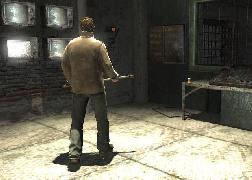
I’m several hours in now and so far it’s pretty good. The camera, which I identified back in 2007 as a potential problem, is indeed not very good. It’s not that the camera doesn’t work, it’s just that it’s a standard, 3rd person camera. All of the composition and framing that the previous Silent Hill games have done is lost on this Western 2-stick generic system. Other than that, things are pretty good. The Silent Hill vibe is well captured, the influence from the Silent Hill movie is clear and not nearly as annoying as I feared it would be. Pyramid Head looks good (though it remains to be seen if they’ll actually use him correctly or just make him a cool-looking boss), the combat system is pretty slick, and the levels are pretty well designed. I’m surprised that there have been so few Otherworld transitions so far; by this point in any other Silent Hill game, I would have gone into and out of the Otherworld several times, but as it is it’s only shown up once or twice (and even then for very short durations).

I will say that the game has a few issues above and beyond the camera. After playing for a while this evening, for example, I stopped being able to bring up the item menu. I can bring up the weapon menu, and if I try to transition from the weapon menu to the item menu, I can see the item menu appear for a brief second, but then it drops me back in the game (I even tried to switch the buttons around to confirm it’s not some problem with my controller). This is a problem because it means I can’t access health drinks, and that’s a problem because all of a sudden the difficulty of the game has spiked. I’ve gone for three or four hours without a single death, but at my current save I’ve died ten or fifteen times (the last two or three because of this bug with the item menu, admittedly).

This brings me to another problem: after fifteen deaths I realized that I’ve actually been carrying a gun around for most of the game. The gun icon appears at the bottom of the screen, far away from all the other weapons, and though I’ve probably had it since the first hour of game play, I never saw it there and never once used it (the game probably told me that I collected it, but after that I probably saved and promptly forgot it was there). I only found it because I tried hitting the d-pad in a desperate hope that the health drink command was mapped to some other button (no luck). The game hasn’t been very hard so far and I really haven’t needed the gun (I mean, Silent Hill is about lead pipes), but it sort of sucks that it’s been there the whole time and I didn’t even know it. I even dispatched a boss or two without ever realizing it was there.

So, my impression so far is that the game is pretty good. It knows the history of the Silent Hill series and has chosen a path that is sincere to that history without being a carbon copy (unlike some other games I could mention). I’m disappointed with the camera (especially for the indoor environments) but I like the combat system. The game’s been pretty easy up until this one difficulty spike, but the real problem is probably that the UI for the item and weapon screen is a) buggy and b) hard to read. The bugs will probably go away with a system restart, and now that I know to look more carefully at my item screen, I hope I won’t miss an important part of my inventory again.

If my impressions were a terrorist threat level, I’d be “guarded but optimistic.”

Silent Hill: Shattered Memories Review

Today I have posted a review of Silent Hill: Shattered Memories, which I urge you to go read forthwith. My work-related horror game slump continues, and to tell you the truth, I haven’t actually played Shattered Memories yet. Instead, this review is written by one of my best friends, Casey Richardson. Casey is an authority on video games, and we’ve played many of the games on this site together (including, at my urging, atrocities like Michigan and The Ring: Terror’s Realm). Today he’s provided a through review of Konami’s latest Silent Hill entry, which has caused my interest in this game to increase ten fold. Check it out.

Thanks Casey!

Curse this Mountain!

I finished Cursed Mountain this evening after two marathon play sessions this week. My new years resolution is to pick up the pace when it comes to completing games this year, and first on my list was the game about Buddhist ghosts in Tibet.

The game is good but it needs another two months of polish. It’s got lots of minor, easily-fixable problems that end up dragging the overall quality down. Which is a shame, since the story and setting are pretty great.

If you’re interested, check out my full review.

Cursed Mountain Impressions

I put a couple of hours into Cursed Mountain this weekend. So far I’m enjoying it a lot more than I expected to.

The thing about Cursed Mountain is that it is an old-school horror game that is trying its best to learn from new-school games. The camera system, in-game UI, ranged combat system, and several other core elements clearly mark the game as post-Resident Evil 4, but the pacing, storytelling, and level design are based in the norms of a generation prior. If you are the type of horror gamer that thought that Resident Evil 5‘s focus on intense zombie-capping action was the worst idea ever, and you can’t wait to get back to searching rooms for hidden items and reading lots of diary entries, Cursed Mountain may be something you want to check out. The pace is very slow, the majority of the game play is walking around and examining things, and there’s lots of story to keep track of (protip: turn on subtitles to avoid missing key info in crazy flashing cutscenes).

Personally, I am a fan of this kind of game play. I really enjoyed Resident Evil 5 as well, but Cursed Mountain’s let’s-explore-the-narrative-as-physical-space design fits like a glove. The game has some issues; the camera is jittery and makes the frame rate look like it is stuttering when it really isn’t, the collision detection seems to snap on square-shaped objects, and the cutscene system makes the story is a little difficult to follow. But I like the control scheme, I like the combat system, and Cursed Mountain’s content is nice and fresh: I’ve never played a game about ghosts in remote Himalayan villages before. It’s not totally grabbed me like some other surprisingly good games have, but after my 2 hours of play it feels pretty solid.

One bit of advice: the game makes it harder than necessary to follow the story. The cutscene style is interesting but hard to follow–there’s a lot of benefit to turning on subtitles. Also, when you collect documents, you can’t read them directly from the item collection screen; you need to back out, go to the inventory, and read the document there. It took me a while to realize this. Since this kind of game makes up for slow pacing by giving you narrative content to chew on, I recommend focusing on the story and not letting the cutscenes or documents slip by when you play.

So far my impressions of Cursed Mountain are pretty positive. It’s trying to stay fresh in the game play and narrative department while simultaneously giving props to its survival horror roots. I’m hoping that it can pull off that balance for the rest of the game.

Resident Evil 5: Horror Lite

It’s with great shame that I admit that I finished Resident Evil 5 more than a month ago, wrote 90% of a review, and then did nothing with it until now. You can go read my thoughts on the game if you are interested.

The executive summary is thus: Resident Evil 5 is clearly a horror game, and clearly a Resident Evil game, but more importantly in terms of its design focus, it’s an action game. It shows that action and horror do not need to be mutually exclusive, and also follows Resident Evil 4’s lead and brings many of the elements of its previous format into its new design, but it’s ultimate goal as a game is to be fun and action-packed rather than scary. And in that regard, it’s almost entirely successful.

The Grand Hyatt Taipei-Umbrella Connection


The lobby. There’s no mistake: this is zombie territory.

I’m in Taiwan this weekend for work. I’m staying at the Grand Hyatt Taipei, which is a pretty classy hotel, and happens to be across the street from a seriously huge building. Since this is our first time in Taiwan, my family and I have been visiting the local hot spots, eating dinner at outdoor night markets, and generally acting like clueless tourists. We’re lucky to speak the two non-native languages that seem most accepted here, English and Japanese, and getting around hasn’t been a problem.

However, I noticed that the Grand Hyatt has a particular motif repeated across the stone floor of its lobby. The symbol seemed strangely familiar, but I couldn’t quite place it. It wasn’t until I noticed the pattern covering the floor of an elevator that it hit me–the Grand


A close-up of the logo.

Hyatt is clearly a front for Umbrella.

Vanity is a terrible weakness, and Umbrella falls for it every time. No matter what sort of secret laboratory or hazardous waste facility they may construct, they always brand the hell out of everything with their logo. It’s like they were worried that people wouldn’t know who was responsible for releasing zombies upon the unsuspecting populous.

And as we can see, here in the Grand Hyatt Taipei, the tradition continues. We can safely surmise that the hotel is either an Umbrella front, or is innocently reusing a building that was originally constructed for the purposes of nefarious research. Either way, it’s obvious that a secret lab lurks beneath the hotel. We just need to find the Jack of Spades Key to enter the locked door that will lead us underground.

Why Juon Matters


Seriously, this is important.

The recently released Wii horror game, Ju-on: The Grudge, is not a fantastic game. It’s plagued by a game design that values one-hit kills and requires levels to be replayed over and over, and yet it’s so simple that no amount of replaying can really make you a better player. The level designs themselves are schizophrenic; you are required to explore each level in order to find batteries, but the battery mechanic also acts as a time limit, which encourages you to b-line for the end of the level with minimal exploration. The art is good and the scares, while repetitive, are effective; the controls are interesting and the sound is pretty great. But while there are a few glimmers of brilliance, the level design relegates the game to mediocrity.

And yet, I think that Juon is an extremely important game. It’s the best example I’ve seen, in any genre, of a game made to target a specific audience the way that movies are. Juon is the exact equivalent of a teen horror movie; it’s simple and designed to be enjoyed with friends. And as far as I can tell, the target audience for this game is teen girls.

What Hollywood (and its equivalents here in Japan) understand is that generation after generation of teen movie-goers will spend their $10 to see whatever shlock the gets thrown on the screen as long as a few basic tropes are maintained. Pop-out scares, sex and gore, ominous or vaguely unhappy endings, and improbable twists are common traits, but there are many others. See also: Nightmare on Elm Street/Friday the 13th/Scream/I Know What You Did Last Summer/etc etc etc. It’s not that all of the films in the teen horror genre are bad–the key observation that Hollywood has made is that their income is fairly reliable regardless of the film quality.

Anyway, one of the reasons that these films are successful is that they encourage kids to watch in groups. The fun part about horror movies when you’re a teenager is seeing them with friends, even when the scares are cheap. Even really, truly bad movies can be fun when you’ve got somebody to wisecrack with, and a lot of folks will sit through films with friends that they wouldn’t have the nerve for alone. I think it’s this social aspect that makes horror films–particularly those aimed at teens–so successful.

The creators of the Juon game get this idea at a fundamental level. The game is aggressively casual–the control scheme is simple, the difficulty never spikes, and there’s no real rules to learn before jumping in. And, most importantly, it supports a second player: using the second Wiimote, a friend can cause scary pop-out events to take place whenever they want. It is this feature that is key to understanding why Juon matters: the game is not intended to be played alone. With friends around, the snail-like movement system and cheap one-hit kills are more forgivable. I think that this game is targeted squarely at young, casual gamers who enjoy horror with friend but are not about to go buy Resident Evil 5. A large segment of that group, I think, is young women, a large audience that rarely receives recognition.

Juon is exactly the game version of a teen horror flick. Yeah, it’s shallow, the scares are cheap, the story goes nowhere, and the gameplay is kind of annoying. But it was designed, I think, with a specific audience in mind, one that is a huge segment for horror films but rarely a target for horror games. And in that respect, it’s extremely well done. Perhaps this is the result of Juon director Takashi Shimizu’s participation in the project, or maybe it’s just the work of a smart developer. Either way, I’m impressed that the model was so effectively translated. It will be interesting to see if this experiment results in financial success.

It should also be interesting to compare and contrast Juon with Calling, which came out in Japan this week. Like Juon, it’s a first-person flashlight-wielding horror game for Wii involving Japanese horror film tropes. I’m interested to see if it will feel the same as Juon, or if it follows a more traditional horror gamer-focused route.

Happy Halloween + Notes


It’s just not the same.

As you’ve probably noticed I’ve had a hard time lately keeping up with this blog. Actually, the problem is that I just haven’t had much time to play games, and without games as input it’s pretty hard to generate consistent output. Right now I’m sitting in a hotel in Sapporo on the end of a business trip; work has been so hectic lately that by the time I get home, eat dinner, put the kid to bed, and am ready to play games, my first inclination is to sleep.

But it’s Halloween for crying out loud. I can’t pass up a post on Halloween. Plus, there’s a ton of info that’s come up in the last several months that I meant to post about and just never got to it. So, in lieu of real content, here’s a summary of some of the noteworthy horror-goings-on that have happened lately.

  • Frictional Games, the awesome guys behind the Penumbra series, have been blogging about horror games since June. Readers of this site will find a lot to enjoy there, so check it out.
  • The Saw game is out. Though the reviewers panned it it’s certainly a horror game and I should add it to the database.
  • If you’ve never played the Crimson Room series you are missing out. And now you can play them on PSP or DS. Since I think I committed to including handheld games this year, that makes these candidates for the Quest. The horror aspect of these games is probably debatable, as it’s all discreet and suggestive, but I think that they’re probably a good fit.
  • Speaking of hand-held horror, Nanashi no Geemu: Me has been out here in Japan for a few months and looks pretty good. Goddamn I need to find some time to play all these games.
  • McFarland Publishing was kind enough to send me a free copy of a new book on horror games, Horror Video Games: Essays on the Fusion of Fear and Play to review. I was somewhat surprised to see myself listed as a source for a couple of the articles. The editor, Bernard Perron, is the same guy who organized the Thinking After Dark conference that I attended earlier this year in Montreal. The text looks pretty good but I haven’t had a chance to sit down and read it carefully. I’ll post a full review when I have had more time to read it.
  • Dead Space: Extraction is out and got pretty good reviews. It’s a light gun game so it’s not a fit for the Quest, but it looks like a lot of fun nonetheless. I also have a copy of Resident Evil: Umbrella Chronicles that I need to get to at some point.

Here in Japan Halloween pretty much means lots of orange and black decorations on store windows and a sudden abundance of jack-o-lantern flower pots for sale. Horror is a summer genre here, so while this country loves horror media and produces a lot of highly scary stuff, Halloween just isn’t the same. So here’s hoping that you guys are enjoying the holiday.

Horror vs the In-Game Store


As good as it gets?

Problem: Balancing game difficulty across ten or twenty hours of play in a way that enables all types of gamers to enjoy your game is hard. Games that get too hard will be frustrating, but games that are too easy are boring. There’s a sweet spot between those two that makes a perfect game, but the trick is that the entire scale changes from player to player. If you’re a game designer, one of your primary challenges is to ensure that your players don’t get bored and don’t run into difficulty cliffs.

Solution: Let the player buy their way out of difficult situations. Rather than just relying on maximum gaming prowess, you can let the player who is bored or the player that isn’t quite good enough to side-step a particular challenge by putting in effort somewhere else. Very often in horror games lately, this system takes the form of an in-game store.

For example, consider Devil May Cry. That game very quickly sizes you up as a player; you’re either hardcore or casual, and by the end of the first chapter the game knows which and can taylor the rest of the experience accordingly. It does this by throwing a huge difficulty spike at you in the form of the very first boss. The path from start to that first boss, which is a sort of giant lava spider thing, is pretty smooth and easy; there’s only two different types of enemies to dispatch and Dante is such a badass that just about any player should be able to make it. The boss, however, is incredibly difficult for a first-time player. Everybody I know who played Devil May Cry had the experience of hitting a brick wall when they faced the first boss.

The genius of this system is that there are basically three ways to get passed the boss, and depending on which you choose the game can safely label you as hardcore or casual. The first way is just to be a badass player from the first level–this clearly marks you as hardcore. The second way is to enable the easy mode when prompted; after you beat the first couple of rooms the game lets you know that you can tone the difficulty down if you choose. Players who do this are not in it for the challenge (and aren’t putting their prides on the line), so it’s safe to assume that they want a more casual experience.

The third way is to power up Dante before facing the boss by beating an inordinate number of enemies. It’s this third method which is key to identifying the type of player who is in it for the challenge but isn’t necessarily interested in having to do every single challenge flawlessly. By killing enemies you can collect orbs, which you can use to purchase power-ups at an in-game store (you also have the chance to power-up Dante between levels). For the first boss, a particular powerup–“Air Raid”–is extremely handy. But to buy Air Raid you need to fight a lot more bad guys than you would normally face if just progressing through the game normally. A player that does this is intentionally grinding; he leaves rooms and then re-enters them so that the enemies will respawn and he can fight them again. This kind of player is also encouraged to graduate into the flawless hardcore player by rewarding him when he uses variety in his combo strings (which Devil May Cry links to “style points”). The happy-to-grind player is also hardcore; they don’t want any hand holding but are willing to work around a particularly hard section by putting in extra play in other sections. The game store is key to capturing this type of game.

This system actually works very well, which is why tons of games use it now. God of War, Ninja Gaiden and other brawlers have similar systems, but so does Resident Evil 4, Resident Evil 5, and Dead Space. The implementation in each of these last three examples varies, but the intent is the same: to give players a way to explicitly control the difficulty of the game without making them feel like they are being given a handicap. It also gives these games a way to reward exploration.

The problem with the in-game store is that, when it comes to horror games, the game mechanic can come into conflict with the game narrative. Demons leaving glowing orbs in the world when they die is pretty easy to accept, but snakes dropping gold coins? Or hulking flesh monsters keeping valuable weapons schematics in their back pockets as they lumber around their derelict space craft? Sometimes it just doesn’t make any sense.

In Resident Evil 4, the store is an actual in-game guy. Though campy, I think that this implementation is the best; it makes narrative sense that different store owners, despite all looking like clones of each other, might have different stock. In Resident Evil 5, the store guy has been dispensed with and now you can only make purchases and level up before entering a level. For no particular reason (well, actually, to prevent the player from powering up too quickly), certain upgrades for weapons are not immediately available. As a in-game guy, this might make sense; the clerk can just be out of stock. As a sterile UI screen, it makes a lot less sense. Dead Space’s implementation also bothers me. If we’re to believe that Isaac is this awesome engineer, shouldn’t he be able to like, I don’t know, hack the store software and get the items he needs rather than having to loot the corpses of fallen scissor hand monsters? Maybe that was too Bioshock.

Another issue with this kind of upgrade system is that it can’t be relied upon for normal game play. The game designer must assume that the player will not upgrade his weapons, or that he will upgrade them in an inefficient way. The goal is to provide a workaround for difficulty cliffs, not a new minmax problem. Games like Fatal Frame 2, the upgrade system was intended to reward players who are good at difficult “zero shots,” but the end boss was balanced such that players who didn’t upgrade their camera in the right way could get to the end of the game with a bunch of useless skills. To fix that problem they had to move the last save point far away from the end boss and put a bunch of easy enemies in between the two so that players could get some extra level-up points after they had saved their game. I complained about this at the time–it was a hack necessitated by the way that their upgrade system works and by the design of the end boss, and it made the end of the game very frustrating.

But the worst offender has to be the Resident Evil 5 money system. Other than the upgrade gating, there’s no problem with the actual implementation: pick up funds by killing enemies or by finding them hidden around, and use those to buy weapons and upgrades. The problem is that, in the context of the game, this turns Chris and Sheva into grave robbers. Never mind the ever-present colonialism overtones that have sparked debate in the past (which I still maintain are unintentional–the game strives to avoid this linkage, but it often fails)–it doesn’t feel good to go into the ancient ruins of a lost civilization and steal golden statuettes in order to buy bigger guns. I’m not just trying to be politically correct here: for the protagonists, who are ostensibly working for an African aid organization, this sort of behavior is in direct opposition to their character. In fact, the narrative and the believability of the game’s world and story are hurt by this system.

So I’m beginning to think that the in-game store system isn’t a very good fit for horror games. It works well in games like Devil May Cry, where there’s not much need to get the player to suspend their disbelief and keep it there. But in horror games, working the store into the narrative in a way that makes sense seems pretty tough. I’ve yet to see it work smoothly; Resident Evil 4 is probably the best example, and even then the system adds to the game’s overall ridiculousness. Usually these games take place in extreme situations, so it’s reasonable to expect the characters to act in extreme ways. When they instead steal lost relics out of burial grounds or take a break from rescuing the president’s daughter to shoot a diamond out a rock, we are reminded that this is a game system and encouraged to think of it only as a collection and minmax challenge.
Storytelling in Resident Evil 5

I’m close to ten hours into Resident Evil 5. So far, I’m throughly enjoying it; it’s not some great masterwork but it’s an extremely well-made game and I haven’t run into any major frustration points. Unlike the technically similar Dead Space, the moment-to-moment game play is deep enough that simple pattern alterations (new enemy, new weapon, new location) are enough to keep the whole thing from feeling repetitive.

Still, it is quite repetitive. The formula is very well defined at this point: traverse through an area that establishes the current location, spend some time shooting zombies, move on to a simple puzzle or QTE event, uncover some story details, fight something new, fight the boss monster. The boss monsters are, as in every Resident Evil game, people that transform into giant tentacle monsters who have conveniently-colored bulbous weak spots. After shooting the red or orange swollen spots and then doing a particularly strong attack when the monster is down, we are treated to a cutscene about the story and the end of a chapter. At the beginning of the next chapter we get the chance to buy items and organize our inventory before continuing. The reverse influence from Devil May Cry is very clear.

But despite the rather systematic precision with which this formula is iterated, it actually works pretty well. I am particularly interested in the segments that aren’t about fighting, the location-establishment and story-building sections. These are the areas where Resident Evil 5 is strongest as a horror game. As in every previous Resident Evil game, there are files to find that fill out the back story and ancillary characters though diaries and reports. Along with the cutscenes, these documents are the player’s primary source of information about the context within which they are operating, and though they can be skipped, the game is much more interesting with them.

The locales that the players visit are the other major storytelling vector in the game. When in exploration mode, Chris and Sheva move through areas that bear the mark of past events. Sometimes this is simple foreshadowing; an empty, quiet, blood-spattered hall is always a good place to heal and reload, as some new threat is surely around the next corner. But other times, the locales themselves suggest a much larger story world. For example, the goal for the first couple of chapters is to track down a slimeball arms dealer named Irving. Irving only has about five lines in the entire game, and they are all conveyed through cutscenes, so he’s not a deep character by any means. But if you are paying attention, you eventually realize that he ran an oil field in Africa that served as both cover and a source of funding for biological weapons research. His work is recent, but later evidence that you uncover links it to the operations of the Umbrella corporation and provides backstory for the company’s movements long before the first Resident Evil events occur. The oil field and subsequent processing plant are just set pieces along the way for players who are not paying attention to the story; a new backdrop against which to shoot zombies in the head. But to people who care about the narrative, the locales provide very specific story context.

The other narrative method that Resident Evil 5 uses is dialog between Chris and Sheva. Since Resident Evil 4 the background environments in Resident Evil games have become much more visual and static; it used to be that every interesting corner of every room would have a line of text associated with it, and by throughly investigating everything the player could learn, often through simple suggestion, about their environment and their character. But the increase in pace and streamlined approach to the series defined by Resident Evil 4 doesn’t really allow for (or encourage) ransacking and investigation of everything. So instead, the characters talk to each other about what is going on and what they see. It’s a method that is used sparingly but to great effect; Chris and Sheva’s observations on their environment do a lot to tell us about how they feel about it.

I don’t mean to suggest that Resident Evil 5 has some fantastic story. It’s just the standard evil-corporation-bio chemical-underground laboratory-conspiracy schlock that they repeat every iteration. It’s fairly predictable and, unless they pull off some crazy Bioshock twist in the next few hours, I think it will end the way most Resident Evil games end: with a giant base explosion enveloping the otherwise-indestructible final boss and the fate of key antagonists left ambiguous. But the story that is there, however trite, is well-told. For players interested in more than just exploding heads, there’s more here to find.

This is my primary complaint with games like Gears of War, which an extremely similar type of game system. In Gears, there’s absolutely no time spent on exposition. The cut scenes exist only to progress the active plot, and while there are some clues about the background of the characters and the events that lead up to the story, it’s so out of focus that it really doesn’t matter at all. The locales really are just set-pieces; despite being beautifully rendered they have no particular meaning or relevance. Nothing can be investigated, and the characters never talk about their surroundings. Even when the protagonist visits his home after spending years in prison, he doesn’t have a single comment to say about it. He’s too busy shooting aliens in the face to notice.

But as a player, I want my characters to notice. I want more information than what is immediately available on the surface. That’s what keeps the game interesting when the game play itself starts to wear thin. In extreme situations, a compelling narrative can keep people playing an otherwise terrible game. Resident Evil 5’s story is nothing to write home about but I’m very happy that it’s there. While the game play is deep enough to last for a while, the addition of story and narrative, especially when communicated a variety of ways, makes Resident Evil 5 a much more interesting game than some of its contemporaries.